Premium Wooden Tea Boxes for Gift Suppliers, Retailers and Corporate Brands
I create wooden tea packaging that helps gift suppliers, specialty retailers, and corporate buyers present tea in ways that feel thoughtful, durable, and commercially viable. My approach combines practical supply‑chain decisions with design choices that increase perceived value at shelf and online. Below I explain formats, materials, finishes, customization options, logistics, commercial use cases, and merchandising ideas—each section written to reflect what buyers care about when choosing a wooden tea solution. Throughout the text I naturally include the product terms you search for, marking them in bold where they appear.
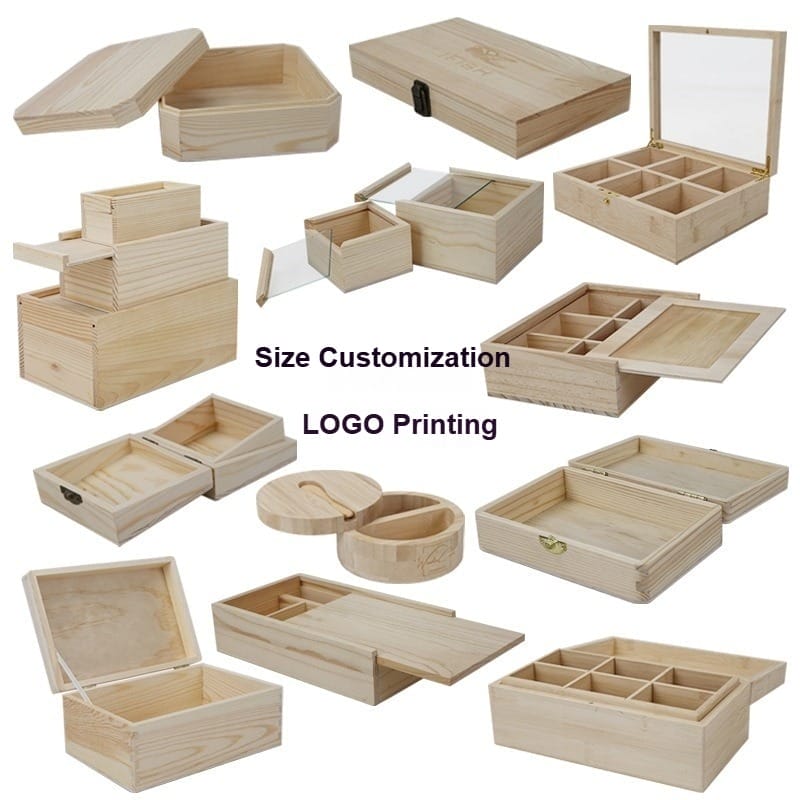
Design families and why format matters
A box’s opening style, internal layout, and overall footprint determine how it performs in packing, display, and gifting.
- Drawer and flip‑top formats. A compact drawer is ideal for small sampler sets and impulse shelf placements; a flip‑top with a visible interior is better for gift counters and online photography. A well‑executed wooden tea box design balances tactile satisfaction (soft‑close slides, magnetic catches) with manufacturing simplicity to lower per‑unit cost.
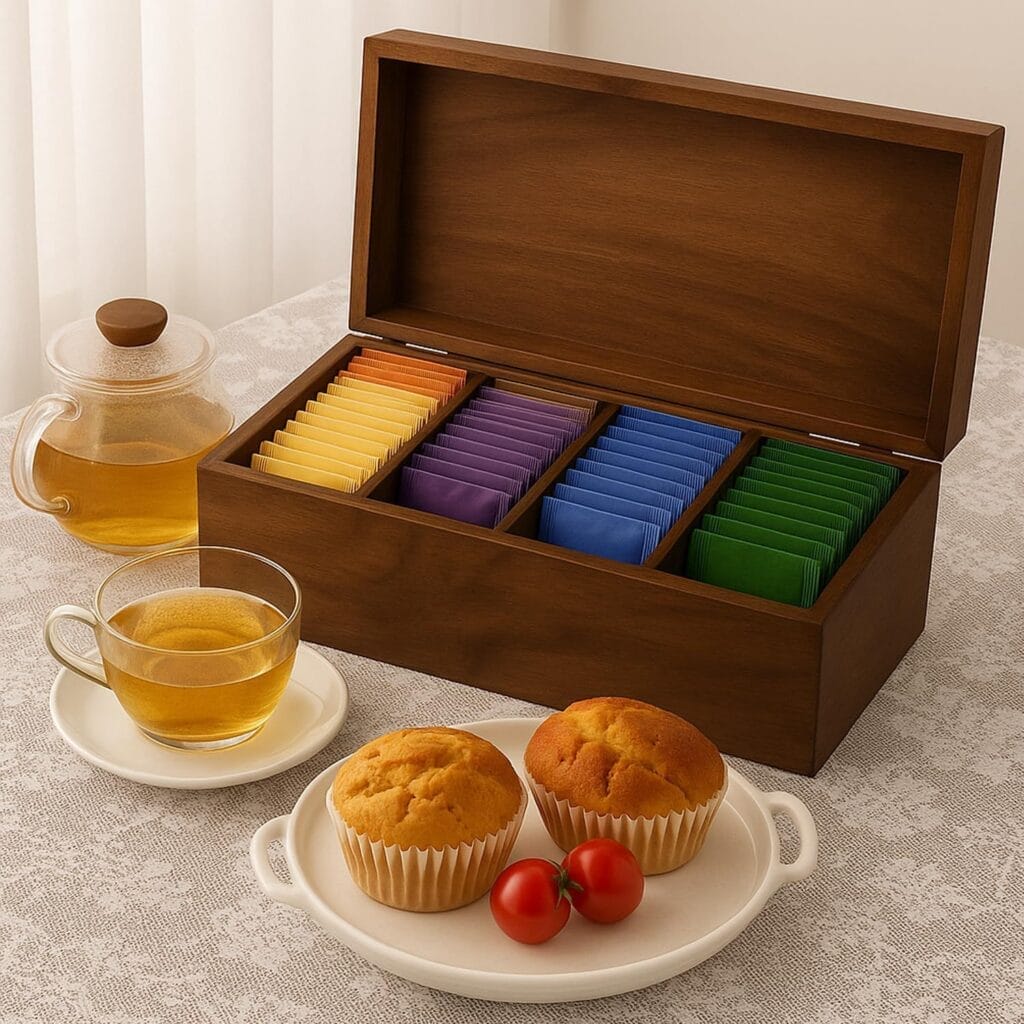
- Compartmentalized chests. For curated assortments I specify fixed or removable partitions sized for sachets, pyramid bags, or small tins. A tidy interior reduces in‑store handling and minimizes damage during transit—key when selling a multi‑pack or a tea bag wooden box assortment.
- Windowed keepsake boxes. Adding a clear panel or recessed glass creates an immediate product reveal, which suits a prefilled wooden tea box with tea offering. Visibility often improves conversion because buyers can see the blend or presentation without opening the packaging.
- Modular and stackable systems. For corporate gifting and event programs, stackable cases that nest or palletize efficiently cut logistics cost. These outer shells pair well with a line of interchangeable inserts so you can use one case design for multiple SKUs.
Material choices and finishes that fit markets
Choosing species and surface treatments is both aesthetic and pragmatic.
- Species selection. Lighter woods (maple, birch) project modern or Scandinavian minimalism; mid‑tone species (oak) pair well with natural branding; darker timber (walnut, sapele) reads luxury. Bamboo is an increasingly popular, sustainable alternative that keeps weight down for high‑volume retail channels.
- Surface protection. Food‑adjacent products need finishes that resist humidity and protect fragrances. I recommend moisture‑resistant lacquers or food‑safe oils depending on the market. For humid export lanes we add extra sealing layers to avoid warping and to preserve a wood tea box’s look through storage and display.
- Hardware and joinery. Magnetic catches, discreet piano hinges, and stamped brass clasps provide premium interaction without high failure rates in volume packing. Finger joints and reinforced corners are cost‑effective ways to ensure durability for repeat handling.
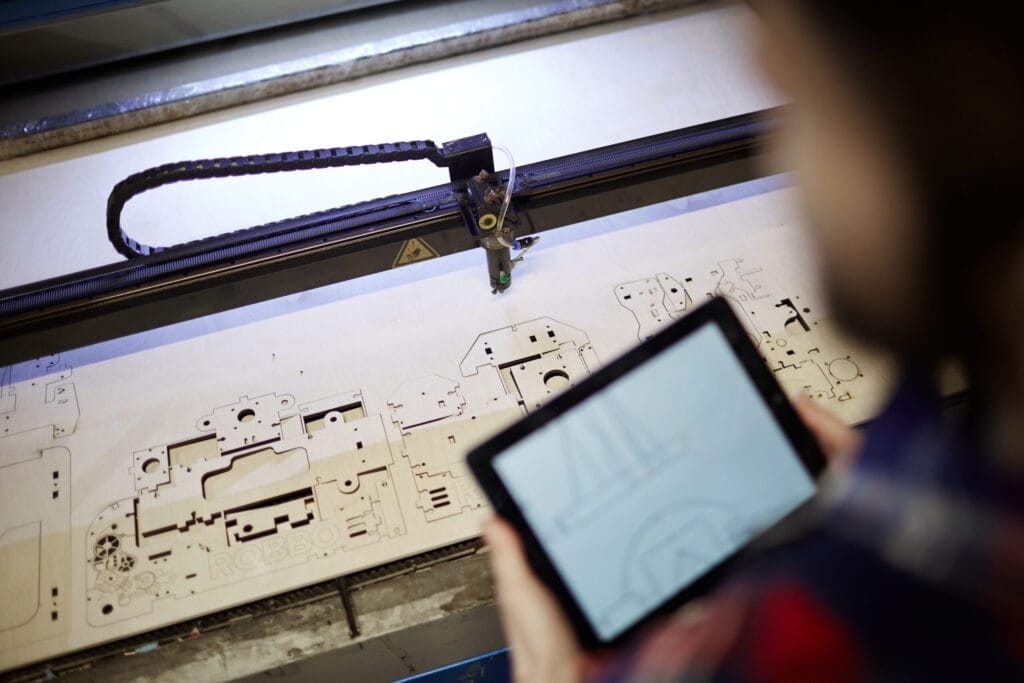
- Inserts and cushioning. Foam, molded pulp, or laser‑cut plywood inserts both protect and organize contents. For a tea set with tins and accessories, precise inserts keep items stable and speed up packing lines.
Customization, personalization and brand storytelling
Customization transforms a plain box into a meaningful brand touchpoint.
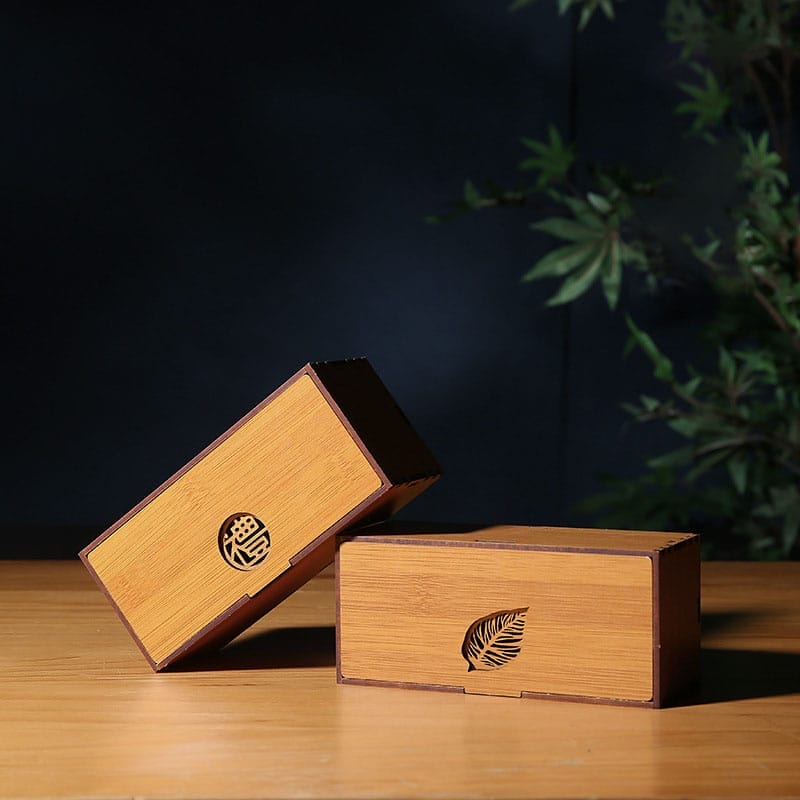
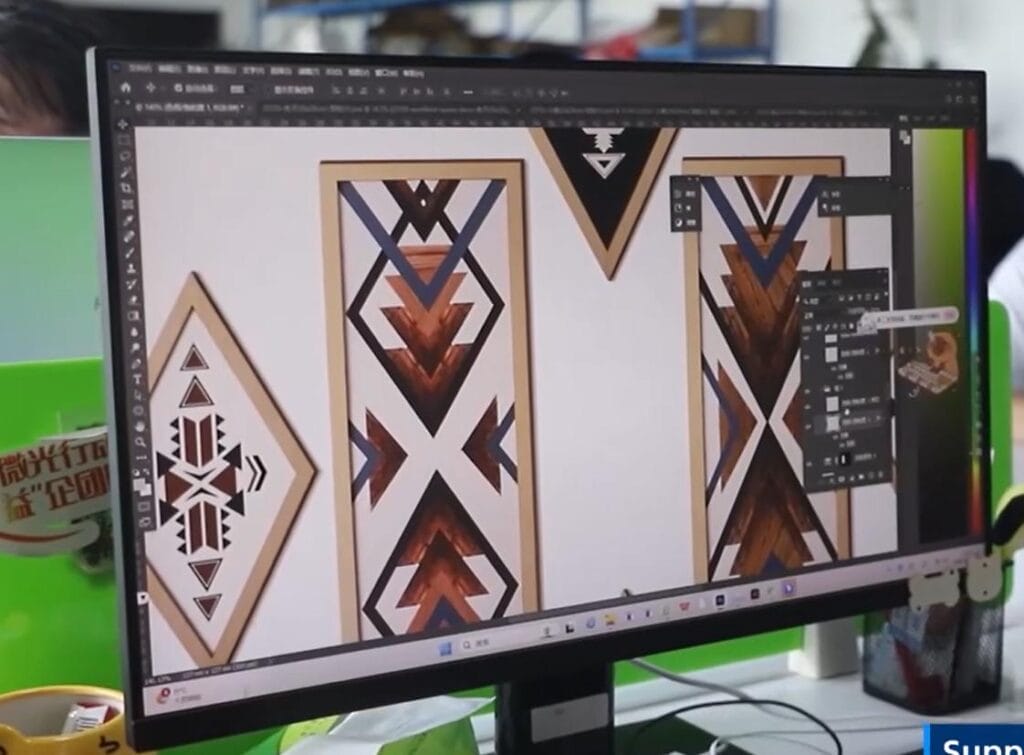
- Branding options. Laser engraving is a durable, tactile branding method that remains legible across reorders; UV digital printing enables full‑color art on structured surfaces when needed. An engraved wooden tea box communicates craft and permanence without extra packaging.
- Personalization at scale. Variable‑data engraving enables name‑level personalization for corporate gifting or events. Offering personalized wood tea boxes or short runs of personalized wooden tea box keeps client budgets manageable while delivering memorable keepsakes.
- Productization and ready‑to‑sell sets. Some buyers prefer finished SKUs. We can assemble wooden tea box with tea kits—matching blends, labeling, and shrink wrapping—so products are shelf‑ready on arrival, reducing time to market.
- Bespoke inserts and accessories. Branded infusers, wooden spoons, or sample jars can be incorporated into the box design to increase average order value and create premium bundle options.
Logistics, MOQ and production realities
Packaging is part aesthetic, part operations. I design with both in mind.
- Palletization and carton optimization. Bulk shipments of wooden tea boxes wholesale should minimize dead space. We engineer carton sizes and inner packaging to optimize pallets and lower freight cost per unit.
- MOQ flexibility. Wooden packaging has higher tooling costs than paperboard, but we structure tiered MOQs to let you test concepts: stock shells with swappable inserts have lower minimums; custom engravings or unique molds require higher bands.
- Lead times and buffers. Timber drying, finishing, and assembly take time. For seasonal programs I recommend earlier planning and, where demand justifies it, buffer stock to shorten reorder cycles.
Sustainability considerations that buyers care about
Sustainability is increasingly important for gift suppliers and retail buyers.
- Responsible sourcing. I use responsibly harvested timber and can provide chain‑of‑custody documentation on request. Engineered boards help reduce solid timber volume while maintaining aesthetic integrity.
- Longevity and reuse. A durable box that becomes a keepsake reduces single‑use waste and supports higher lifetime value for your customer. Emphasizing reuse also aligns well with eco‑conscious retail positioning.
- Recyclable packaging choices. Inner trays, fillers and bulk cartons can be specified as recyclable or compostable. For direct‑to‑consumer gift sets, minimal secondary packaging reduces perceived waste while protecting the product.
Use cases and channel strategies
Different channels prioritize different box attributes.
- Specialty tea retailers. They need curated assortments with premium presentation. A compartmented box with a visible lid and clear product hierarchy supports storytelling and higher price points.
- Gift shops and boutiques. These channels favor compact, giftable SKUs. A small tea bag wooden box with simple inserts and low freight makes seasonal displays effective.
- Corporate gifting and events. Names, dates, and logos matter here. Personalized keepsakes—orders of personalised wooden tea box or personalized runs—should be efficient to produce and easy to distribute.
- Hospitality and F&B. Miniature boxes for suites or lounge displays must be sturdy, simple to replenish, and consistent across reorders.
Quality control and testing protocols
Consistency reduces returns and builds trust with buyers.
- Incoming material checks. Moisture content, grain patterns and board flatness are checked to avoid warp and finish variance.
- Finish performance testing. Adhesion and humidity tests replicate in‑market conditions to ensure finishes remain stable through transit and storage.
- Assembly checks. Hardware torque, insert fit and closure integrity are validated per lot to reduce arrival defects.
Retail presentation and merchandising tactics
The right presentation moves product off the shelf.
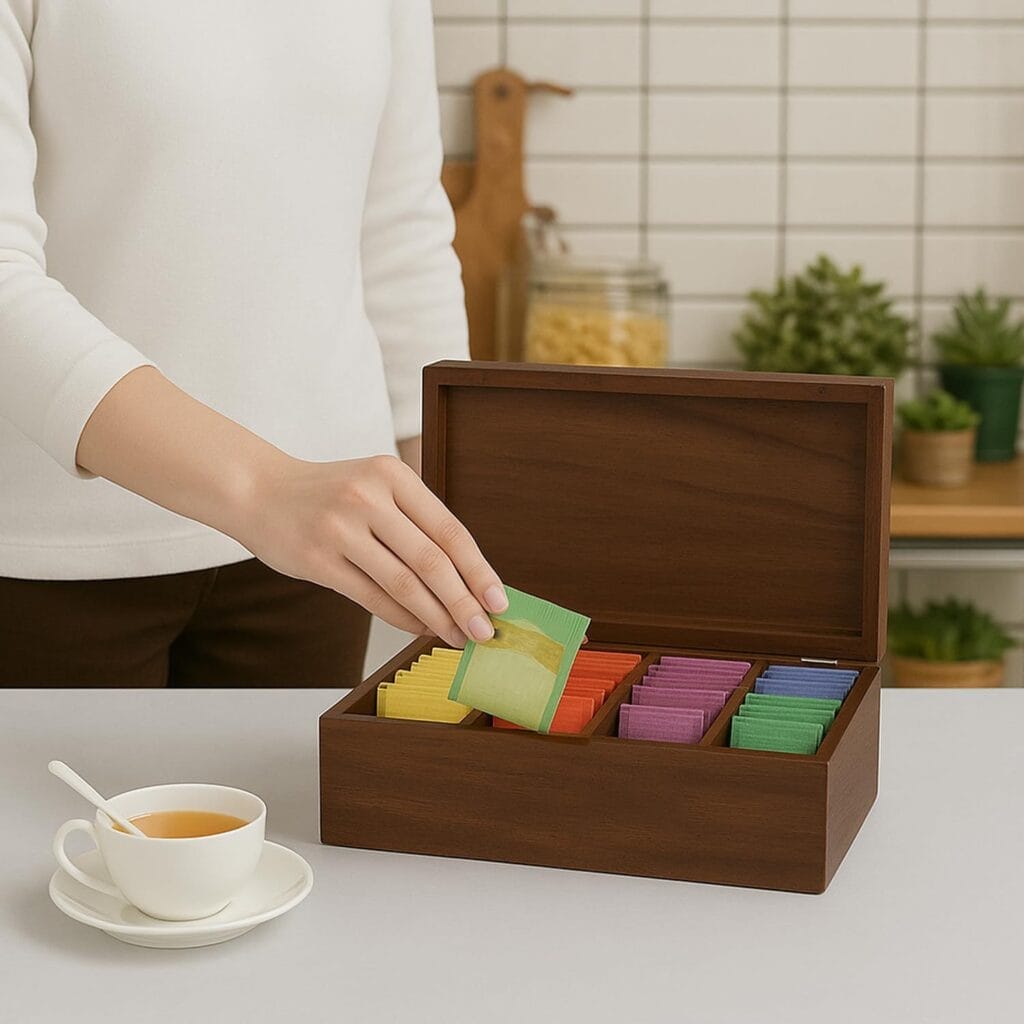
- In‑store sampling. Open sample units with interior staging invite touch and drive conversions. For a wooden tea box, an open display showing compartments and contents reassures shoppers.
- POS and seasonal displays. Limited runs with seasonal staining or engraved messaging create urgency. Small counter units with compact assortments work well near checkouts.
- E‑commerce imagery. Well‑lit photos of structured interiors remove ambiguity and reduce returns. A prefilled wooden tea box with tea listing benefits from flat lays that show contents, supplements, and close‑ups of engraving.
Pricing, margin and commercial levers
Wooden packaging supports premium pricing but requires smart SKU planning.
- Premium uplift. A crafted box justifies higher shelf prices. The initial packaging cost is often offset by increased perceived value and higher average order value.
- SKU rationalization. Using a standard shell with customized inserts reduces tooling costs and inventory complexity while allowing mix‑and‑match assortment strategies.
- Bundling and add‑ons. Adding small accessories—infusers, spoons, tasting notes—creates upsell opportunities and spreads packaging cost across higher invoice totals.
Safety, compliance and food‑adjacent considerations
Wooden boxes that interact with food need careful finish choices and clear labeling.
- Food‑safe finishes. When tea or tins contact internal surfaces, I specify finishes certified for food contact where required and document materials on request.
- Traceability and labeling. Inner lid cards or inserts can provide brewing instructions, origins, and batch codes for traceability.
Creative product ideas and seasonal promotions
Fresh ideas keep assortments interesting for repeat buyers.
- Collector’s series. Limited color stains, numbered engraving, and themed inserts create collectible seasons that encourage repeat purchase.
- Refillable models. Sell the box once and offer refill packs for blends—this encourages repeat business and deepens customer relationship.
- Event kits. Compact modular boxes filled with single‑serve sachets make ideal welcome gifts for conferences or weddings.
Real examples from production
- A boutique client wanted a premium holiday set. We produced a three‑compartment flip‑top with engraved logo and a dark stain; it sold at a significant uplift versus their paperboard gift set.
- An events planner ordered personalized keepsakes for a wedding. Using variable‑data engraving, we personalized each box with guest names while keeping production time and cost reasonable.
- A corporate client ordered modular boxes for employee wellness boxes. Standard shells with custom foam inserts cut distribution complexity and simplified replenishment across multiple sites.
How I work with brands and suppliers
I provide an end‑to‑end service from concept through repeat production.
- Concept and sampling. I develop initial mockups and produce physical samples for approval—both unbranded prototypes and branded samples.
- Production and QC. Once approved, I manage production, finish application, and per‑lot QC testing to ensure consistent results.
- Ongoing support. For repeat orders I offer batch matching and buffer stock options so urgent reorders can be met without extended lead times.
Practical checklist for choosing a box
- Define the use case: retail shelf, corporate gifting, hospitality amenity, or subscription refill.
- Select species and finish based on desired weight, look and cost profile.
- Choose a standard shell for multiple assortments when possible to lower MOQ and inventory complexity.
- Decide on personalization level: full color print, laser engraving, or variable name engraving.
- Plan logistics early: optimize cartons, palletization, and protective inserts for shipping efficiency.
Final perspective
Wooden tea packaging is more than a container: it’s a commercial tool that protects product, elevates brand perception, and enables premium pricing. By balancing material choice, finish performance, insert design, and logistics optimization, gift suppliers and retailers can offer memorable products that perform well in store and online.
If you want, I’ll turn these concepts into concrete SKU proposals (dimensions, species, insert layouts), MOQ bands, and lead‑time estimates tailored to the specific product mixes you plan to sell. I can also prepare sample pack options—empty shells, engraved prototypes, or fully assembled wooden tea boxes wholesale kits—so you can evaluate feel, fit, and margin impact before committing to larger runs.