Picture this: a new bangle line launches, the photos look great, orders pour in… and then the return requests start. Most of the complaints sound the same. The bangle is too tight, it slips right off, or the standard size does not match the size chart on the product page. Profit drops, and stock sits.
If you have ever asked how are bangles measured when you place or fulfill a wholesale order, you are not alone. Bangle sizing can feel confusing because it mixes hand size, wrist size, and different ways of writing measurements. For a business that sells jewellery, that confusion quickly turns into higher return rates, extra customer service time, and lost trust.
Accurate bangle measurement matters for the person wearing the piece and for you as the buyer who manages inventory. When you know how to measure bangle size correctly, you choose better product specs, write clearer listings, and guide shoppers toward the right size the first time. Professional methods focus on three main areas:
- Hand circumference for closed bangles
- Internal diameter for a bangle that already fits
- Wrist measurement for cuffs and hinged styles
Qlychee Crafts builds sizing into every part of its wooden bangle lines, from consistent inner diameters to clear size coding and charts. By the end of this guide, you will know how bangles are measured in a professional setting, how to read and explain a bangle size chart, and how to use Qlychee Crafts documentation to cut sizing guesswork, reduce returns, and keep your customers happy.
Key Takeaways: How Are Bangles Measured
Before diving into the details, it helps to see the big picture of bangle sizing.
- Professional bangle measurement relies on three main methods: measure hand circumference for closed bangles, wrist circumference for cuffs and hinged styles, and internal diameter for any bangle that already fits well. Used together, these methods create a simple sizing system that works for both home use and wholesale planning.
- Internal diameter is the most common standard for bangle size in manufacturing and bulk ordering. When you measure the inner diameter of a bangle that fits and compare it to a chart, you can reorder or source in bulk with a very high chance of the same fit. This is why many buyers rely on one well‑fitting reference bangle as a master size.
- Clear measuring methods and charts support business results. When you measure carefully, use a chart to find the right size, and match that to consistent product specs from a supplier such as Qlychee Crafts, you see fewer returns and smoother merchandising across online stores, boutiques, and gift programs.
Understanding Bangle Measurements: Diameter and Circumference
Before you can decide how to find your bangle size, you need to understand the two key measurements that appear on almost every bangle size guide: internal diameter and inner circumference. Once you know what each one describes, the numbers on product pages and spec sheets feel far clearer.
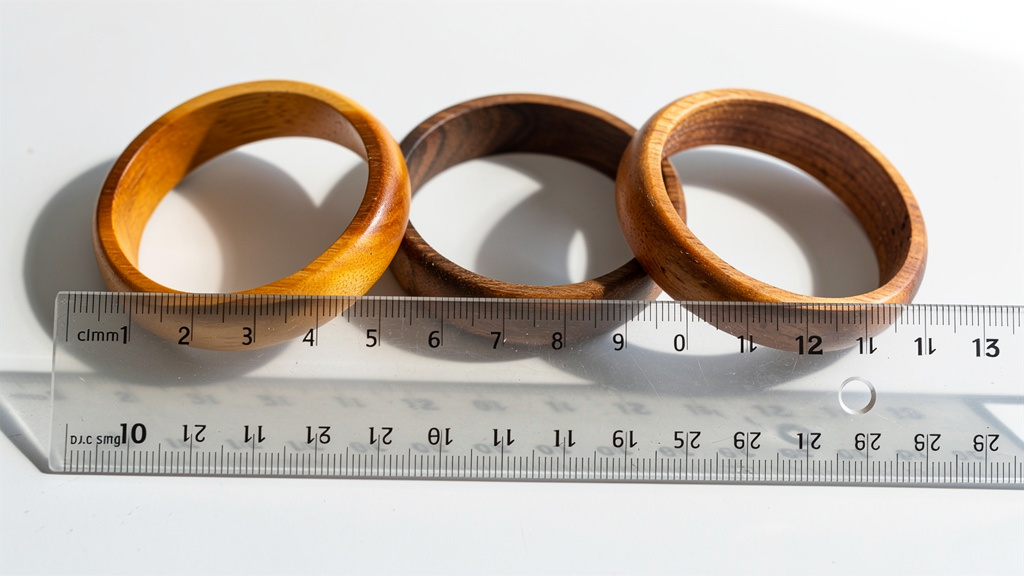
The internal diameter is a straight line that runs from one inner edge of the bangle to the opposite inner edge, passing through the center. Imagine drawing a line from side to side across the opening of the bangle, but only touching the inside walls. That number is usually written in inches or millimeters and is the most common way manufacturers describe bangle size.
The inner circumference is the distance all the way around the inside of the bangle. If you could cut the bangle, lay the inner edge out as a long ring, and measure its length, you would get the inner circumference in inches or centimeters.
There is a simple link between the two measurements, since circumference is equal to diameter multiplied by the value of pi. For example, an internal diameter of about 2.5 inches gives a circumference of just under 8 inches.
In real buying situations, each measurement has its place:
- If you already have a bangle that fits well, measuring its internal diameter is the fastest and cleanest method.
- If you do not have a sample, measuring around the hand or wrist gives you a circumference that you then match to a chart.
Qlychee Crafts lists both diameter and matching circumference values, which helps you compare your numbers to product specs with confidence across many styles and widths.
As many jewelry buyers say, “Size numbers only make sense once you know exactly what they measure.”
How to Measure Hand Circumference for Closed Bangles
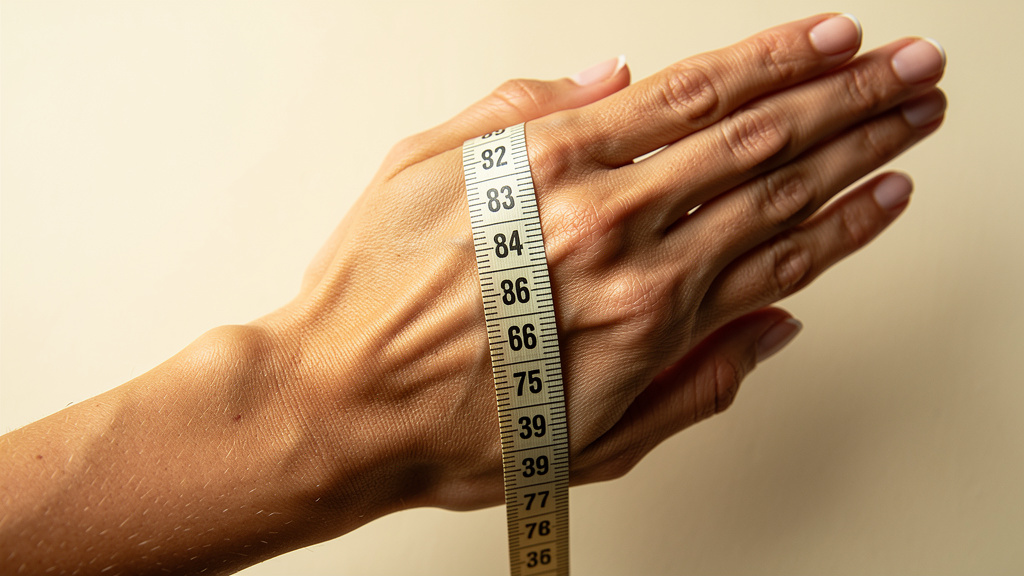
Closed, solid bangles do not open, so they must pass over the widest part of the hand. That means wrist size alone does not tell you much about how they will fit. For this style, the most reliable method is measuring hand circumference at its widest point and then using that number to choose the inner diameter that will slide on without being too loose.
Start by thinking about the motion you use when you put on a closed bangle. Your thumb tucks in, your fingers pull together, and the bangle needs to clear your knuckles. That exact shape is what you need to copy while you measure. You can use a soft measuring tape, or a strip of paper or string with a standard ruler, so you do not need any special tool at home or in a stockroom.
You can follow this simple process for accurate hand circumference:
- Position your hand. Hold your hand the same way you would when putting on a bangle. Tuck your thumb firmly across your palm toward your little finger, and bring your fingers together so the hand becomes narrow and smooth. This lowers the chance that you pick a bangle size that will catch on a knuckle.
- Wrap the tape. Wrap a flexible measuring tape around the widest part of your hand while it is in that position. For most people, this sits across the knuckles and over the base of the thumb. Pull the tape so it sits snugly against the skin but does not dig in, then read the number where the tape meets the starting point.
- Use paper or string if needed. If you use string or a paper strip, mark the spot where the end overlaps the rest of the strip to form a loop. Lay that strip flat and use a ruler to measure from the starting end to the mark. That length is the circumference of your hand. Write it down in both inches and centimeters so you can read many forms of size chart.
For the best fit:
- Measure near the end of the day, when hands are slightly larger from normal activity and warmth.
- Repeat the process at least twice to check that your numbers match.
To convert hand circumference to a bangle’s inner diameter, divide the circumference by the value of pi. For example, a hand circumference near 8 inches points you toward a bangle with an internal diameter around 2.5 inches.
Qlychee Crafts keeps inner diameters for styles such as Geometric Wooden Bangles within narrow ranges like 8.5 to 8.8 centimeters, so once you choose the right diameter range, you can reorder and stock with steady, predictable fit.
Measuring Internal Diameter With an Existing Bangle
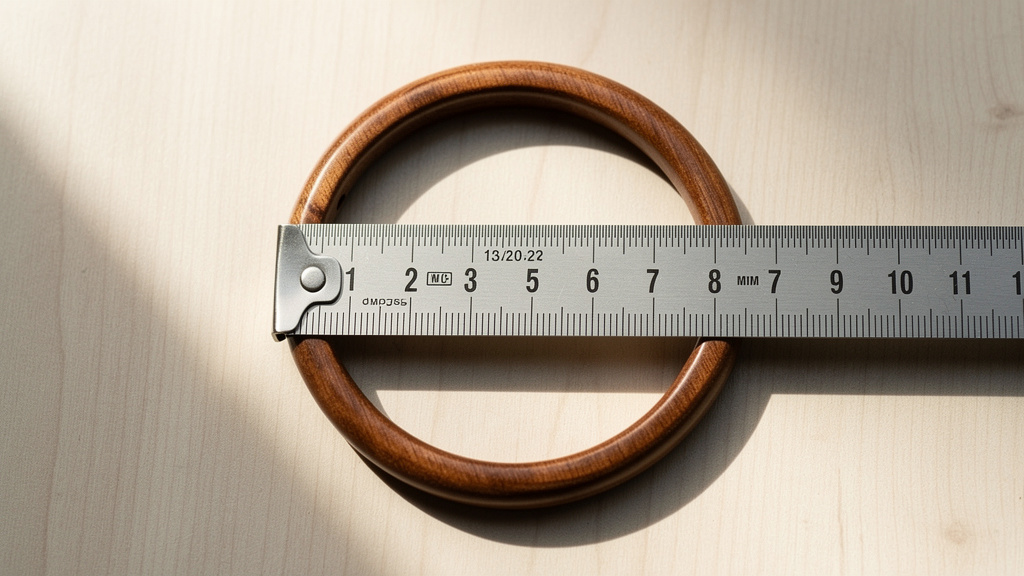
If you already have a bangle that feels perfect, you hold one of the best sizing tools in your hand. Measuring the internal diameter of a bangle that fits well is often the most accurate way to determine size, because it skips hand and wrist measuring errors and reflects the way that style behaves in real wear.
Start by placing the bangle on a flat, level surface, such as a table or counter. Make sure it lies flat and does not tilt, since any angle can change the reading. Use a straight ruler with clear markings in inches and millimeters, or a digital caliper if you have one in a workshop or stockroom.
Line the zero mark of the ruler with the inner edge of the bangle. Then read the distance straight across to the inner edge on the opposite side, crossing exactly through the center of the circle. The number you want is only the span inside the bangle, not the full outer width that includes the material. Even a small mix of inner and outer size can shift a bangle size by several millimeters, which matters when you buy many pieces at once.
Once you have this internal diameter, you can use a bangle size chart or bangle size calculator to match it to a common size label, such as 2.4 or 2.6 inches. Wholesale buyers often ask customers to send one bangle that fits well, measure that piece, and then base bulk orders on that measurement.
Qlychee Crafts supports this method with size‑coded products, tight inner diameter ranges, and clear photos that show scale, so it is much easier to verify that the new order will mirror the fit of the sample.
For quick reference, keep these points in mind:
- Always measure inside edge to inside edge.
- Check the reading in both inches and millimeters.
- Note the style and width of the sample bangle so you can compare like with like.
Wrist Measurement Techniques for Open Cuffs and Hinged Bangles
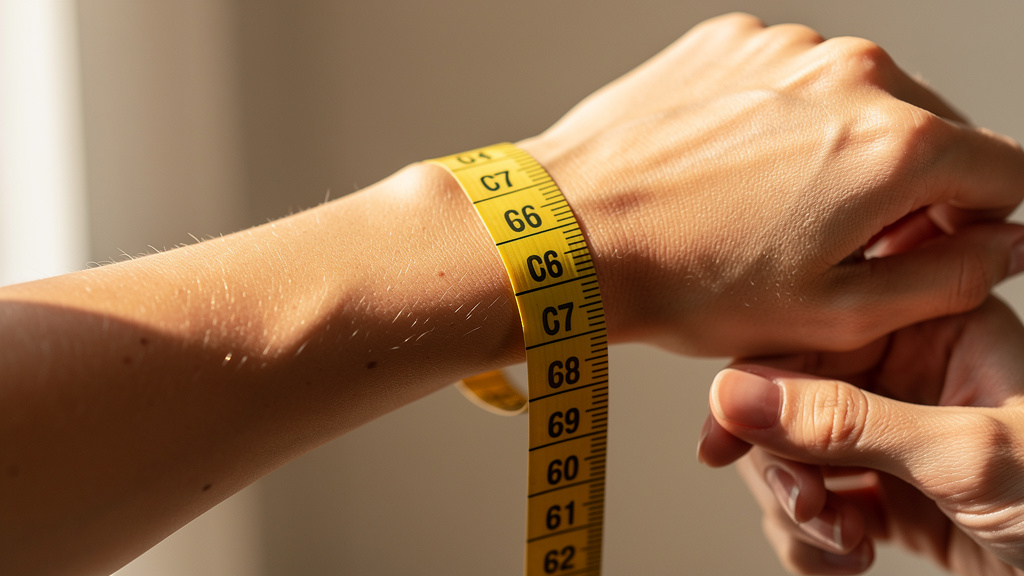
Open cuffs, adjustable bangles, and hinged designs do not need to slide over the widest part of the hand. They open or flex slightly, so the key is how they sit on the wrist. For these pieces, wrist measurement gives you a better idea of proper fit than hand measurement.
Think about where the bangle will rest during normal wear. That point is usually just above the wrist bone, not up on the forearm and not right on the hand. You want a fit that feels secure without squeezing, with a small amount of movement so the bangle can shift naturally when the wearer moves.
To measure wrist circumference for these styles:
- Wrap a flexible measuring tape around the wrist where the jewelry will sit.
- Pull the tape so that it lies flat against the skin without leaving gaps, but also without pressing hard enough to leave marks.
- Note the number where the tape meets the start and write it down in inches and centimeters.
If you do not have a soft tape at hand, you can use a strip of paper or string. Wrap it around the wrist, pinch or mark the spot where it overlaps, then lay it flat against a ruler to find the length. That length is the wrist measurement you will use to determine your bangle size.
Because many cuffs and open bangles are slightly adjustable, you can often match the measured wrist size to the middle of a size range for a comfortable feel.
Remember that very wide or thick bangles can feel tighter on the wrist than thin ones of the same internal size. Qlychee Crafts offers wooden bangles in several widths and diameters, which lets you match wrist measurements to both size and style. When considering options for your next project, unfinished wood bangles for crafts provide an excellent base for personalization through painting, staining, or embellishing. They also allow crafters to experiment with different techniques, making them a versatile choice for various creative endeavors. By incorporating these bangles into your designs, you can create unique, handcrafted accessories that stand out. as you explore metal bangle fashion trends today, consider how they can complement your crafted wood pieces. Mixing materials not only enhances the aesthetic appeal but also allows for a contemporary twist on traditional designs. Stay ahead of the curve by incorporating popular styles and finishes into your jewelry creations.
This kind of variety gives you room to suggest a slightly larger size for a chunky cuff or a closer fit for a slim, minimal piece.
Professional Bangle Size Conversion Chart
Once you have a hand or wrist measurement, you still need to match that number to an actual bangle size. A clear bangle size conversion chart does that job for you by linking wrist ranges, inner circumference, and internal diameter in more than one unit. This is especially helpful when you sell to customers who may think in inches while your supplier lists inner diameter in millimeters.
Below is a simple bangle sizing guide based on common adult sizes.
| Wrist Range (in / cm) | Hand or Bangle Inner Circumference (in / cm) | Bangle Inner Diameter (in / mm) | Common Size Name |
|---|---|---|---|
| 5 to 5.5 / 13 to 14 | 5.7 to 6.1 / 14.5 to 15.5 | 1.8 to 2.0 / 48 to 51 | Extra Small |
| 5.5 to 7 / 14 to 17.7 | 6.5 to 6.9 / 16.5 to 17.5 | 2.13 to 2.25 / 54 to 57 | Small |
| 7 to 8 / 17.7 to 20.3 | 7.2 to 7.7 / 18.5 to 19.5 | 2.38 to 2.50 / 60 to 64 | Medium |
| 8.5 to 9 / 21.5 to 22.6 | about 8.2 / about 20.9 | about 2.63 / about 67 | Large |
To use a chart like this:
- If you measured hand circumference for a closed bangle, find the row where that number fits, then read across to see the matching inner diameter and common size.
- If you measured wrist circumference for a cuff, start with the wrist column instead.
When a number falls between two sizes, think about fit preference and bangle width. A buyer who likes loose movement or who wears stacked bangles may prefer the next size up. Qlychee Crafts shares detailed size specs and sample kits that make it simple to test these ranges before you commit to large stock orders.
Professional Sizing Tips for Optimal Fit and Customer Satisfaction
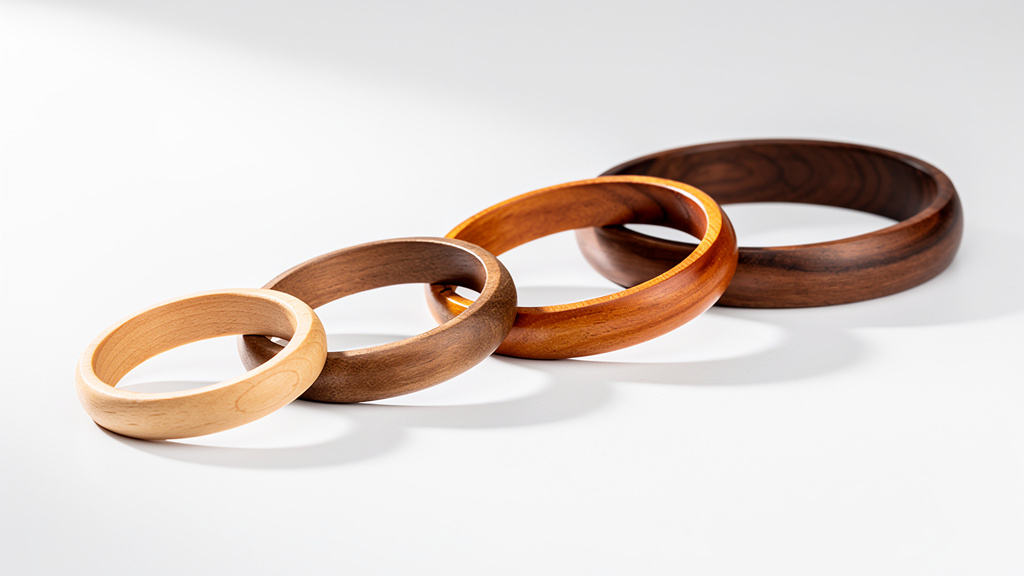
Measurement methods explain how bangles are measured, but fit comfort still depends on small human and design details. As a wholesale buyer or retailer, you can stand out by offering clear fit advice that goes one step beyond simple numbers. This support helps customers choose the right bangle size at home and gives you stronger product descriptions.
As stylists like to say, “Fit is what turns a pretty accessory into a favorite one.”
Several factors shape how a bangle feels in real life:
- Fit preference. Some people like a snug fit where the bangle slides on with light resistance and rests close to the wrist with only a little movement. Others enjoy a looser fit that drifts up and down the arm and makes more sound when they move. When a customer seems unsure, a useful rule is to choose the size that just clears the widest part of the hand for closed bangles, and then size up only one step if they want more movement.
- Bangle width and thickness. A very wide or chunky bangle covers more skin and can feel tighter even if the internal diameter matches a slimmer design. In these cases, it is often smart to suggest the next size up, especially for stiff materials such as wood or solid metal. Qlychee Crafts offers several widths in the same inner diameter ranges, which lets you keep sizing notes consistent while still describing how each shape wears.
- Material and timing. Hands and wrists tend to swell slightly later in the day and in warm weather, so it is wise to measure at the end of the day when the hand is at its largest. This habit gives you a more realistic number for real‑life wear.
A simple workshop saying captures this last idea well:
Measure twice, buy once.
Encourage customers and staff to repeat each measurement at least once. If two readings do not match, take a third one and use the number that appears twice. When you write product listings, always spell out whether a size is based on inner diameter or circumference, and include both inches and metric units.
Qlychee Crafts supports this level of detail with consistent manufacturing and clear labels across its wooden bangle ranges, so every restock behaves like the samples you tested.
Conclusion
Now that you know how bangles are measured in a professional setting, the three main methods fit together neatly. Hand circumference guides you when you size closed bangles that must slide over the knuckles. Internal diameter helps when you already have a bangle that fits and want to match or reorder it. Wrist measurement comes into play with open cuffs and hinged bangles that sit directly on the wrist.
Accurate bangle size measurement is much more than a technical detail. It lowers return rates, shortens customer service threads, and makes your brand look reliable on every product page and in every gift set. Clear bangle sizing guidance gives your buyers confidence to order the right size the first time, whether they shop in person or browse bangles online.
Suppliers play a big part in that success. Qlychee Crafts focuses on steady inner diameters, smooth wood finishes, and detailed size charts to give wholesale buyers a solid base for their own listings. With size‑coded bangles, photographic documentation, and sample options, you can test fit, plan ranges, and stock with less risk.
If you want a wooden bangle line with predictable, well‑documented sizing, this is a good moment to request size samples, review the spec sheets, and build a collection that offers a reliable fit and style for your customers.
FAQs
What Is the Standard Size for a Bangle Bracelet?
There is no single standard bangle size that fits every region or brand, but many suppliers treat an internal diameter of about 2.4 to 2.6 inches, or around 60 to 65 millimeters, as a common medium size for adults. This range tends to work for many average hands, though not all.
Some charts base their bangle size guide on this middle range and then add smaller and larger steps around it. Qlychee Crafts lists the exact inner diameter for every wooden bangle style so you can compare it to your own measurements instead of guessing.
Should a Bangle Be Loose or Tight?
A closed bangle should slide over the widest part of the hand with light resistance, then move freely on the wrist without feeling like it might fall off. Once it is on, the ideal bangle fit lets it shift and spin a little but not slip past the base of the thumb when the hand relaxes. For cuffs and hinged bangles, a small gap is fine as long as the piece does not pinch or dig into the skin.
Very tight bangles can feel uncomfortable and are hard to remove, while very loose bangles can slide off or spin more than the wearer likes. Wide designs also feel tighter than slim ones at the same size, so a small size increase can improve comfort.
Can I Measure My Bangle Size at Home Without Special Tools?
You can absolutely measure bangle size at home without special tools. A piece of string, dental floss, or a narrow strip of paper plus a regular ruler is enough. Wrap the string or strip around the widest part of your hand the same way a bangle would slide on, mark the overlap, and then measure that length on the ruler to find your hand circumference.
With careful technique, this method gives accurate results for closed bangles. For the best outcome, repeat the process a few times to make sure your numbers match, and compare your measurement with a bangle that already fits if you have one.
How Do I Know If a Bangle Will Fit Based on Online Size Charts?
To use an online bangle size chart, start by measuring either your hand circumference for a closed bangle or the internal diameter of a bangle that already fits. Then match that number to the chart’s column for circumference or diameter, making sure you read the right units, such as inches or centimeters.
If your measurement sits between two sizes, think about whether you prefer a snug or loose fit and how wide the bangle is. Read any fit notes in the product description and look closely at photos that show the bangle on a wrist for scale. Customer reviews that talk about sizing can also guide your choice. Qlychee Crafts supports online buyers with detailed photos and clear measurement notes for every wooden bangle style.
What Is the Difference Between Bangle Size and Bracelet Size?
Bangle size and bracelet size use different ideas, so they are not interchangeable. A bangle is a rigid circle, so its size is based on internal diameter or inner circumference and on how it passes over the widest part of the hand.
A chain, cord, or elastic bracelet wraps around the wrist, so its size is usually written as a length, such as seven inches from clasp to ring. That means a seven‑inch chain bracelet does not match a seven‑inch inner circumference bangle.
When you check a bangle sizing guide, always measure hand or wrist the way that style is worn and look for diameter or circumference, not bracelet length.