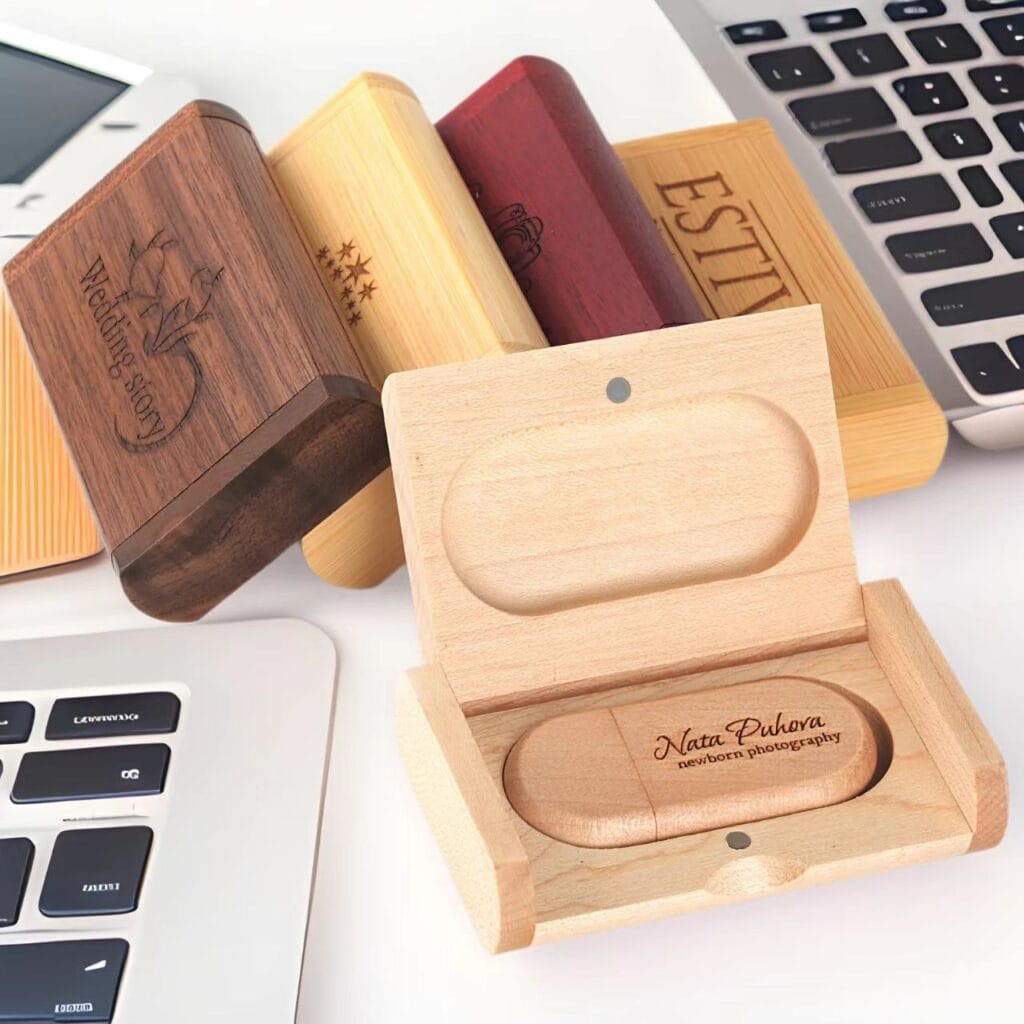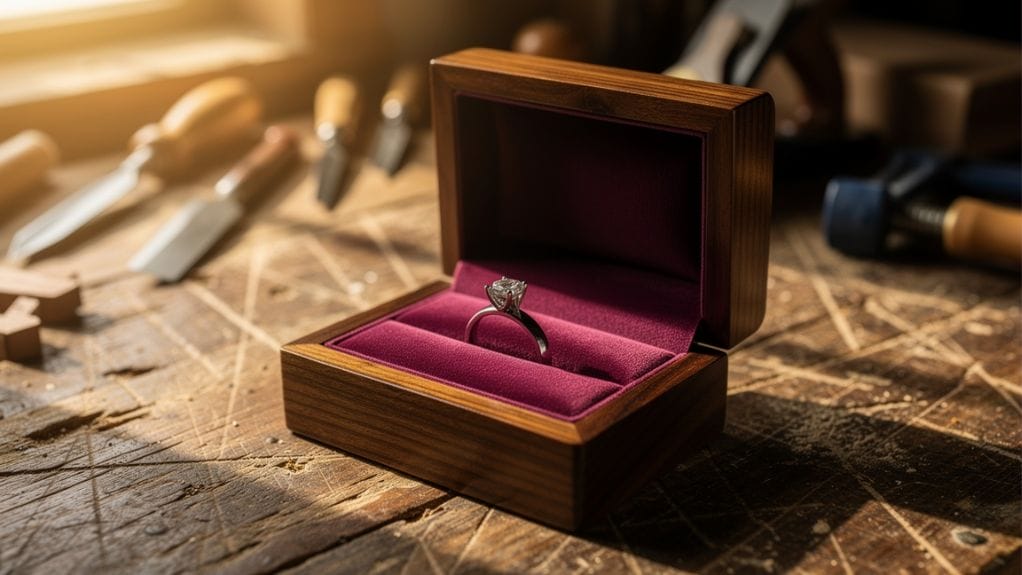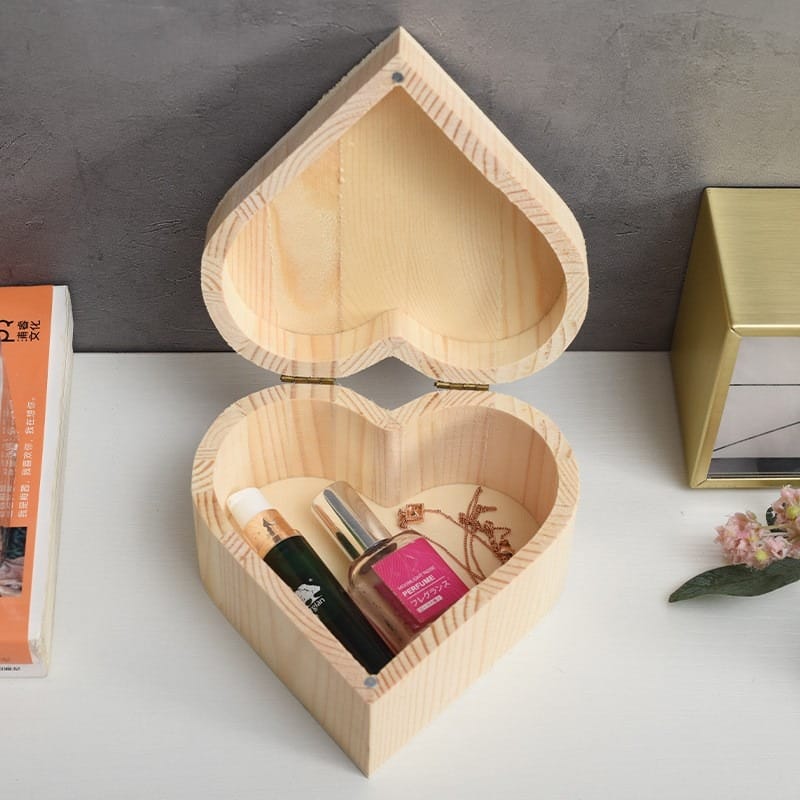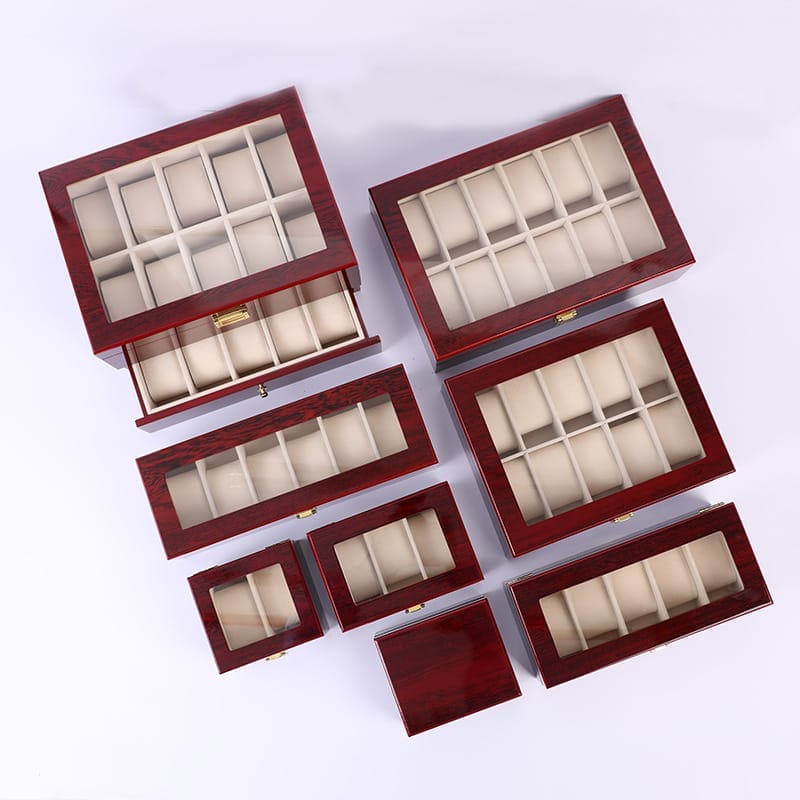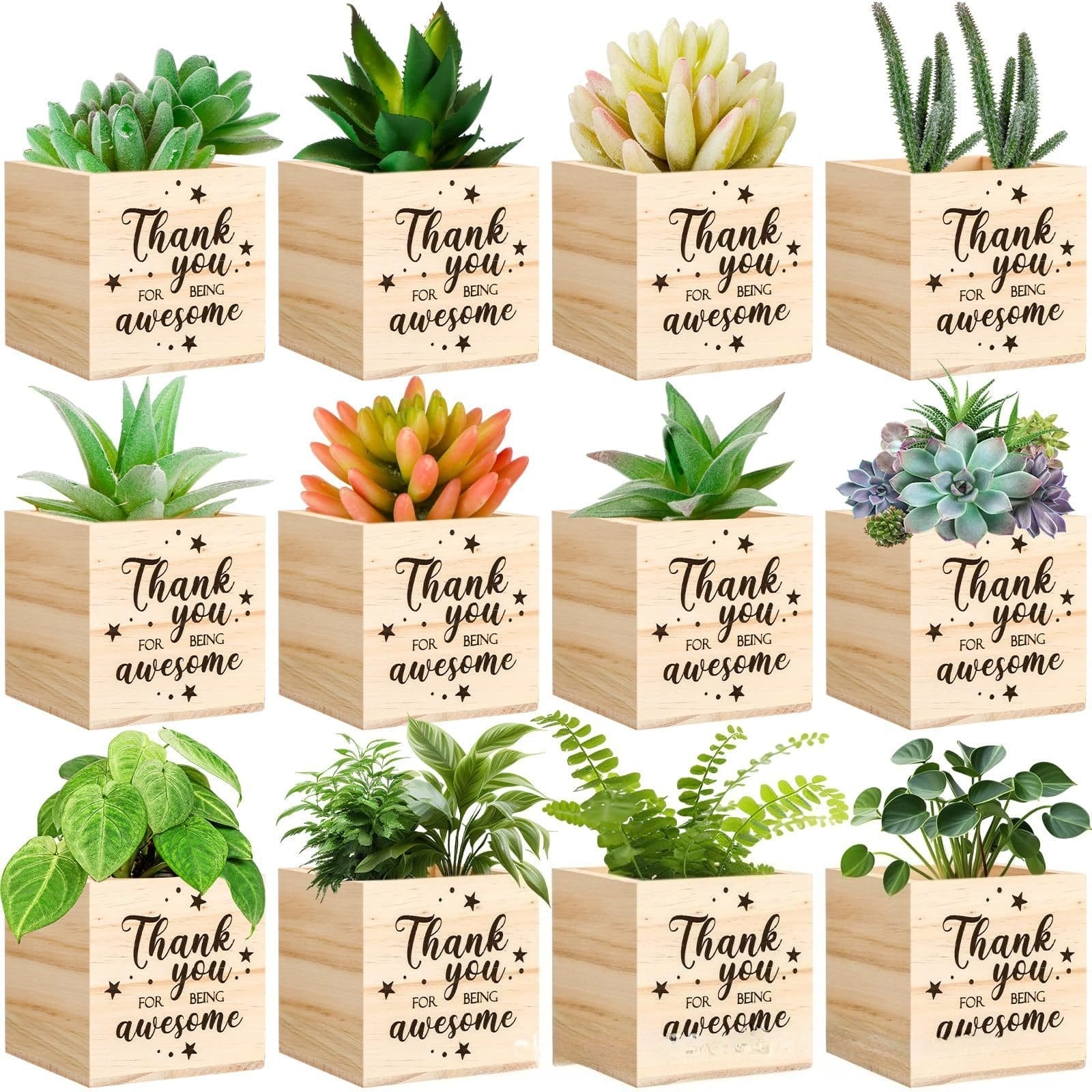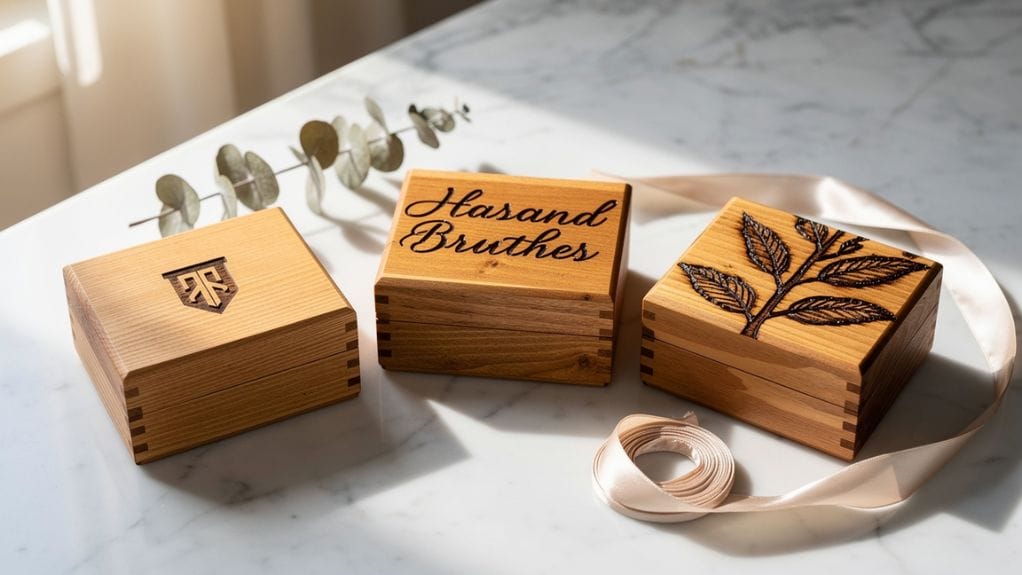
One small change can shift how a product feels. Put a clean engraved logo on a plain wooden box and it turns from simple packaging into a keepsake that supports higher prices and more repeat orders. For a brand manager or buyer, that is real business value, not just decoration.
Personalized wood boxes now show up everywhere in corporate gifting, jewelry, and subscription kits. For small businesses looking to ride that demand, you need to know how to transfer professional designs onto a wooden box in a way that fits your budget, volume, and quality standards.
This guide walks through three practical wood engraving techniques you can rely on. You will see how laser engraving wood handles large runs, how hand tools and rotary tools serve artisanal or small-batch work, and how pyrography supports DIY wood engraving. Along the way, you will also see why starting with stable, engraving-ready boxes from partners such as Qlychee Crafts matters just as much as the tool in your hand.
Key Takeaways: How to Engrave a Wooden Box
Laser engraving is usually the best fit for large B2B orders. Utilizing an industrial laser cutter gives sharp, repeatable logos and text on every lid. That consistency keeps waste low when you scale up.
- Hand engraving wood and rotary tools shine for small batches. Each box keeps a slightly different, handmade character. That crafted feel often supports higher price points in boutique retail.
- Wood burning methods work well for beginners and entry-level sellers. A simple pen or paste plus a heat gun can mark designs at low cost. The dark burn lines stand out clearly on light woods.
- Good surface prep and finishing are as important as the engraving itself. Smooth, dust-free wood accepts detail better and stains more evenly. A clear topcoat protects the design from handling, shipping, and storage.
- Reliable blanks keep your production workflow steady. When you source consistent wooden boxes from Qlychee Crafts, your designs line up, your settings stay stable, and you avoid surprises between batches.
Choosing the Right Wooden Box for Engraving
Before deciding exactly how to engrave a wooden box, look closely at the box itself. Wood species, grain, and surface quality all affect how clean the engraving will look. A good blank makes every method easier and more predictable.
Best Types of Wood for Engraving
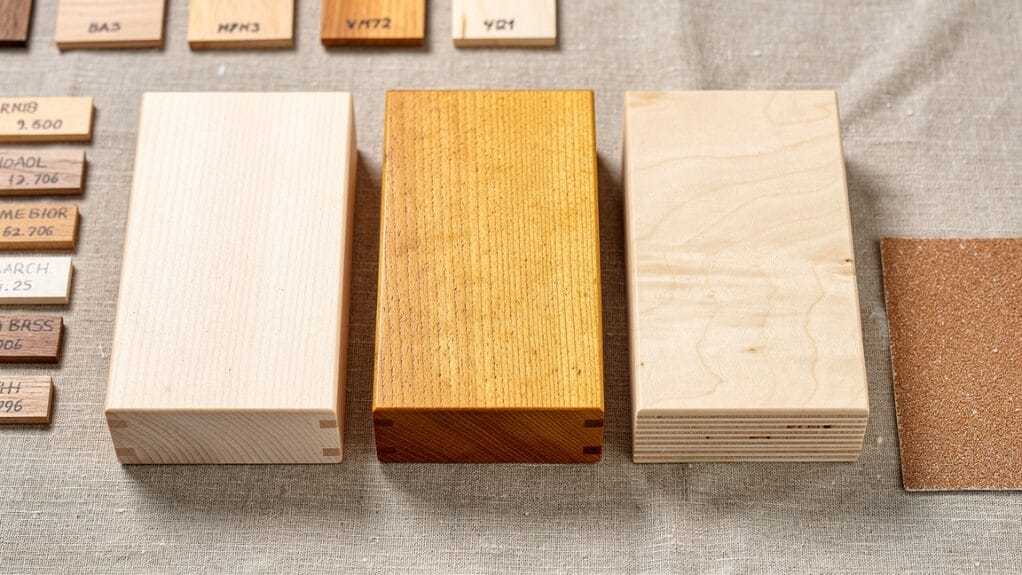
Light, fine-grained woods work best for most wood engraving techniques. Basswood, maple, and birch plywood engrave cleanly with lasers, hand tools, and pyrography because their grain does not fight your design. The lighter color also gives better contrast for dark burns and shadowed cuts. Basswood is soft and forgiving; maple is harder with a tight grain, and birch plywood resists warping while staying smooth.
| Wood Type | Hardness & Texture | Engraving Performance | Best Used For |
|---|---|---|---|
| Basswood | Soft & Fine-grained | Forgiving & Smooth: Easy for hand tools and deep laser relief. | Prototyping & Craft Kits: Ideal for beginners or detailed artisanal boxes. |
| Maple | Hard & Tight-grained | High Contrast & Clean: Minimal charring, produces very sharp, dark lines. | Premium B2B Packaging: High-end corporate gifts and luxury product housing. |
| Birch Plywood | Stable & Multi-layered | Warp-resistant: Stays flat during high-heat laser processing. | Mass Production: Cost-effective for wholesale trays, displays, and bulk boxes. |
By contrast, very knotty or resin-heavy woods can cause problems. Pine with large knots may burn unevenly during laser engraving wood or wood burning, and soft earlywood can chip under chisels or rotary bits. Qlychee Crafts focuses on species and panels that avoid these issues so you can move from sample to production with fewer surprises.
Surface Preparation and Wood Grain Considerations
A few minutes of preparation dramatically improve any DIY wood engraving project. Sand along the grain with fine paper, then remove dust with a clean cloth or vacuum. This smooths tiny ridges that would catch tool tips or scatter the laser beam.
Flat, square lids are especially important for any laser engraver for wood setup and CNC wood engraving. If the surface is warped, parts of the logo may burn darker or shallower. With consistently machined boxes from Qlychee Crafts, you start from a flat, stable base, which keeps settings and results consistent across a full run.
Laser Engraving Wood: The Best Method for Scalable Branded Results
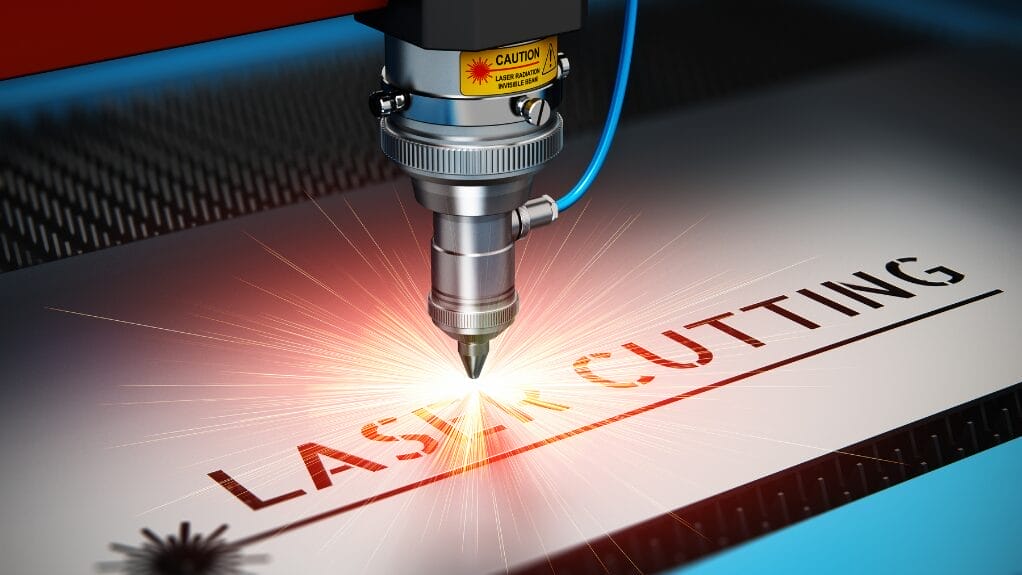
For businesses looking to elevate their product presentation, laser engraving offers a level of detail that traditional printing simply cannot match.
Below, we break down the technical workflow and the strategic advantages of implementing this technology in your supply chain.
Why Laser Engraving Is the Gold Standard for Scalable Branding?
For wholesalers and corporate buyers, laser engraving is the most efficient answer to producing branded wooden boxes at scale. Unlike manual methods, the laser beam follows vector art with photo-like precision, ensuring that even intricate details—such as small taglines, serial numbers, or QR codes—remain perfectly legible.
Once the technical settings are calibrated, every unit in a batch of thousands will match your digital file with zero human error, providing the brand consistency that high-end clients demand.
The Professional Workflow: From Vector Design to Batch Execution
Transitioning from a concept to a finished product requires a disciplined technical process. At the factory level, this involves:
- Artwork Preparation: Utilizing vector files (SVG or AI) in software like Illustrator to ensure infinite scalability without pixelation.
- Surface Protection: Applying a thin lacquer or masking layer to the engraving area to eliminate scorch marks and keep the surrounding wood pristine.
- Precision Calibration: Running test passes on scrap material to balance power, speed, and DPI. While softer woods like Basswood require lower power, dense hardwoods like Oak demand slower speeds and higher intensity to achieve the desired depth and darkness.
Strategic Outsourcing: Scaling Without Capital Investment
While many firms consider purchasing their own wood engraving tools, the hidden costs of ventilation, maintenance, and specialized labor can be high. This is where partnering with a specialized B2B manufacturer like Qlychee Crafts becomes a competitive advantage.
By leveraging our automated production lines, you aren’t limited to wood. While we specialize in wooden boxes, the same laser cutting technology can be used to create custom acrylic inserts or dividers to further personalize your packaging.
- Eliminate Equipment Costs: Order logo-ready boxes directly without investing in machinery.
- Access Expert Support: Benefit from free design assistance for vector optimization and material calibration.
- Guarantee Quality: Receive finished, retail-ready packaging where all setup and quality control are handled by industrial experts.
Hand Engraving and Power Tools: Ideal for Artisanal and Small-Batch Orders

While mass production relies on automation, certain premium markets demand the unmistakable touch of a human hand. Understanding when to deploy artisanal techniques can help your brand appeal to boutique audiences who value character and exclusivity over industrial perfection.
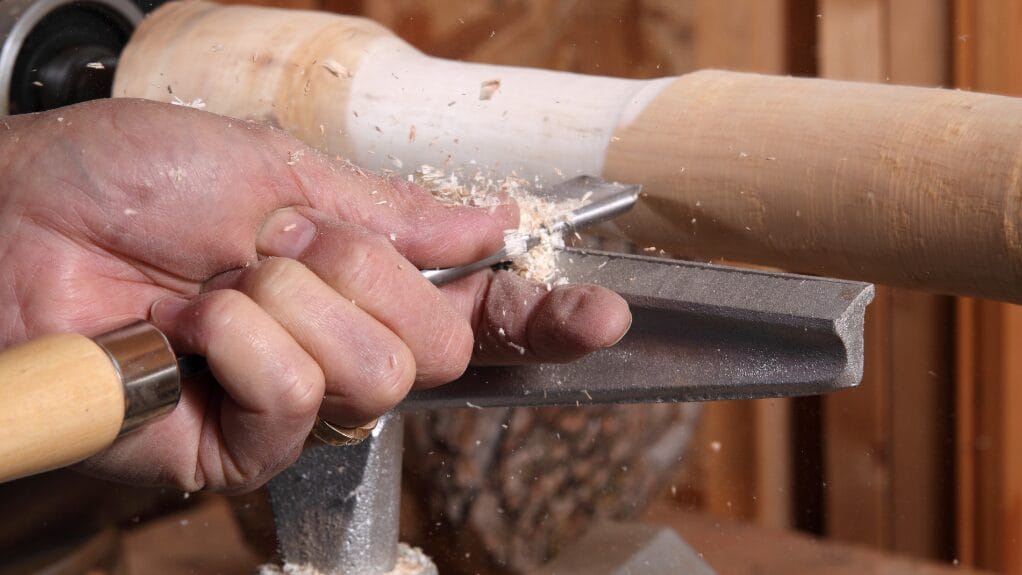
Manual Hand Carving: Highlighting Artisanal Value in Small Batches
Traditional hand engraving is the ultimate choice for brands prioritizing a “handcrafted” narrative. In a B2B context, this method is best for ultra-premium, limited-edition gift sets where uniqueness is a selling point.
- Tactile Appeal: Creates deep, irregular grooves that provide a physical “soul” to the packaging.
- Market Positioning: Ideal for luxury spirits, heritage jewelry, or bespoke awards.
- Key Consideration: Production time is significantly higher; we recommend this only for quantities under 50 units.
Rotary Tool Integration: Bridging the Gap Between Manual and Machine
Rotary tools (like Dremel) provide a semi-automated middle ground. They offer the speed of a motor with the artistic control of a human hand.
- Versatility: Interchangeable bits allow for different effects:
- Diamond bits for fine, hair-line detailing.
- Carbide cutters for deep, structural removal.
- Sanding drums for soft-edged, 3D relief.
- Production Efficiency: Faster than chisels, making it viable for boutique batches (50–200 units).
Sourcing Precision Blanks for Superior Artisanal Results
Regardless of the tool, the final quality depends on the “canvas.” At Qlychee Crafts, we manufacture blanks specifically optimized for secondary engraving.
- Pre-Sanded Surfaces: Every box is sanded to a 240-grit minimum to prevent “grain fighting.”
- Moisture Control: We maintain wood moisture between 8% and 12% to prevent cracking during deep carving.
- Clear Grain Selection: We sort timber to ensure no knots or resin pockets interfere with your design.
Comparison Matrix: Choosing the Right Engraving Strategy
For a B2B buyer, choosing the method depends on the volume, budget, and brand image. Use the table below to guide your project planning:
| Feature | Manual Carving | Rotary Tools | Laser Engraving |
|---|---|---|---|
| Best For | Ultra-Luxury / Unique | Boutique / Artisanal | Mass Production / Corporate |
| Setup Cost | Low | Medium | High (Initial Equipment) |
| Unit Cost | High (Labor Intensive) | Medium | Low (High Efficiency) |
| Detail Level | Artistic / Organic | High / Controlled | Industrial / Precise |
| Turnaround Time | 2–4 weeks (Small Batch) | 1–2 weeks | 3–5 days (High Volume) |
| Logo Complexity | Simple / Bold | Moderate | High (including QR Codes) |
Wood Burning Pyrography: A DIY-Friendly Method with High Visual Impact
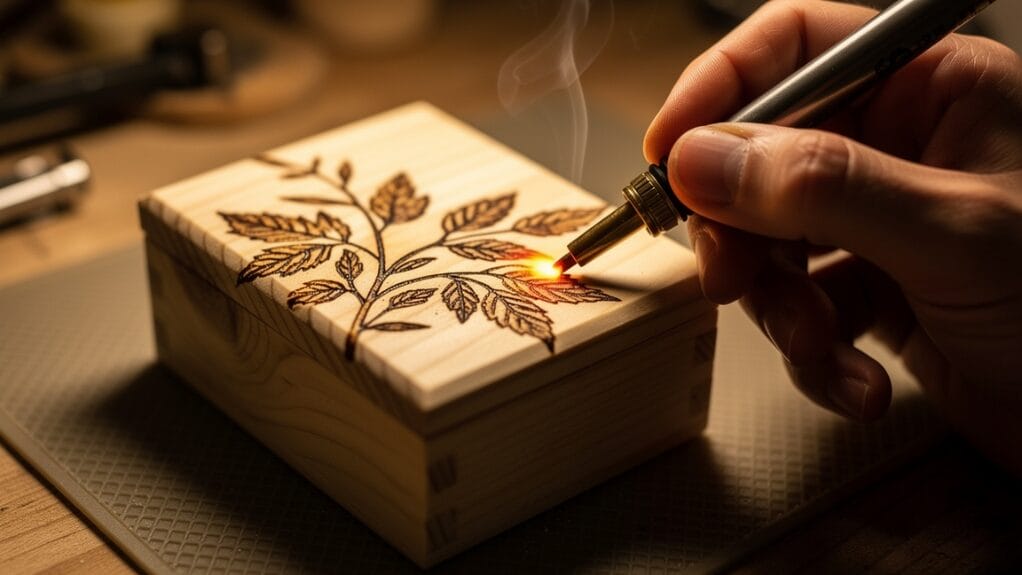
While laser engraving offers precision, pyrography provides a warm, soulful finish that resonates with organic and “farm-to-table” brands. This method creates a deep, scorched contrast that is highly photogenic for e-commerce and retail displays.
Manual Pyrography: Artisanal Branding for Limited Editions
Manual wood burning uses a heated stylus to scorch designs directly into the timber. From a B2B production standpoint, this is a “Slow-Craft” technique best reserved for signature collections or influencer gift sets.
- Tactile Depth: Unlike ink, the burn is physically embedded in the wood fibers, ensuring the branding never fades or peels.
- Design Flexibility: Ideal for freehand script, signatures, or organic patterns that require a “non-industrial” look.
- Safety & Compliance: In a factory setting, we ensure all pyrography is performed on untreated, chemical-free wood to prevent toxic fumes, meeting international safety standards.
Chemical Wood Burning: Scalable Precision Without the Laser
For brands that want the “burned” look but require more consistency than freehand drawing, we use wood-burning pastes combined with high-heat stenciling. This is a strategic middle ground for mid-sized orders.
- The Workflow: A heat-reactive paste is applied through a precision-cut stencil. Once subjected to temperatures above 400°F, the design carbonizes, resulting in near-laser sharpness.
- The Advantage: It allows for repeatable, complex logos that still maintain the “scorched” texture many customers associate with traditional craftsmanship.
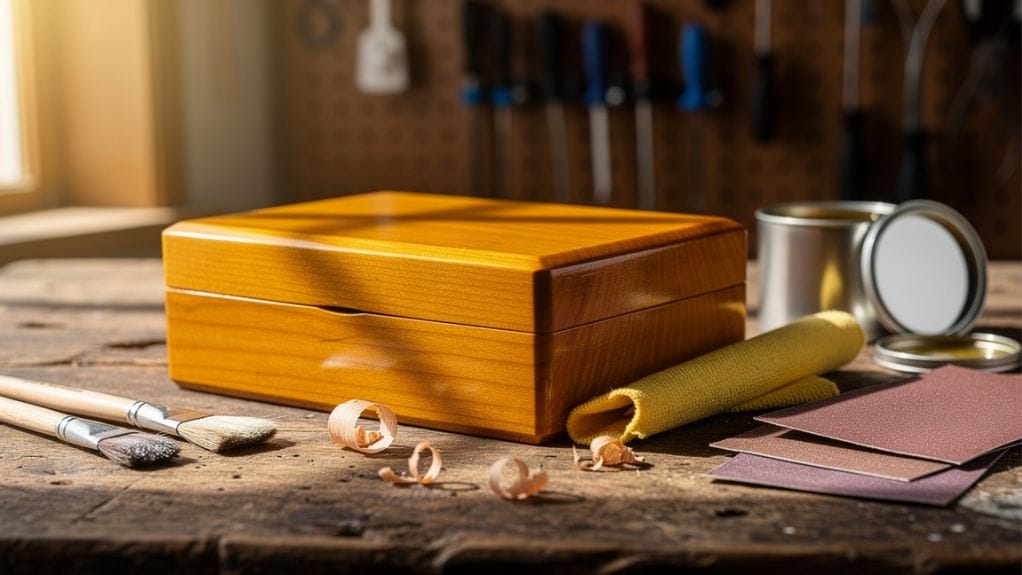
Industrial Finishing: Protecting the Scorched Artwork
A professionally engraved box is never truly finished until it is sealed. For B2B orders, the finishing stage is critical to ensure the carbonized design doesn’t smudge during global transit.
- Post-Burn Sealing: We apply professional-grade oils, lacquers, or polyurethanes to deepen the wood grain and “lock in” the soot.
- Durability Standards: This process ensures the box is retail-ready, moisture-resistant, and maintains its premium feel from the warehouse to the end consumer’s hands.
Strategic Selection: Burn Methods vs. Brand Image
| Feature | Manual Pyrography | Chemical Stenciling | Laser Engraving |
|---|---|---|---|
| Aesthetic | Rustic / “Handmade” | Sharp / Consistent | Architectural / Precise |
| Best For | Limited Artisan Runs | Boutique Branding | Global Mass Market |
| Contrast Level | Very High (Dark Brown) | High (Matte Black) | Variable (Light to Dark) |
| B2B Scalability | Low | Medium | Very High |
Whatever method you use, seal the finished box with oil, lacquer, or polyurethane. Sealing deepens the grain, protects the artwork from handling, and makes your personalized wooden box engraving feel ready for the shelf.
Smart Woodcraft: Integrating NFC and Interactive Engraving
Once you control the basics of how to engrave a wooden box, you can add simple interactive touches. These ideas keep the classic wood look while adding digital features that help tell your brand story.
Invisible Digital Integration: Embedding NFC Chips Under Engraved Logos
You can hide small NFC tags under engraved logos on the lid. A shallow pocket holds the chip, and a thin veneer or insert goes on top. When someone taps the logo with a phone, it can open a menu, a landing page, or a brand story video.
Conductive Inlay Engraving: Turning Wood into a Touch Interface
Another advanced idea uses engraved channels filled with conductive paint or foil. The inlay traces a simple shape, such as a line or icon, that acts as a touchpoint. When connected to a tiny controller, that touch can trigger lights, audio, or other effects inside the box.
Conclusion
There is no single right way to decide how to engrave a wooden box. Laser engraving wood delivers precise, scalable branding for wholesale orders, while hand tools and rotary tools favor small, artisanal runs. Pyrography offers a budget-friendly path into DIY laser engraving wood projects and rustic styles.
Across all three methods, the quality of the blank box matters just as much as the technique. Stable, well-machined wood gives cleaner cuts, smoother burns, and fewer defects, which protects your brand in the eyes of customers.
Whether you want unfinished blanks for your own wood engraving techniques or fully custom, laser-engraved packaging ready to ship, Qlychee Crafts can help. Their engraving-ready boxes, free design support, and flexible MOQ options make it easier to test ideas, launch new lines, and keep your packaging aligned with your brand.
FAQs
What Is the Easiest Method for Engraving a Wooden Box as a Beginner?
For most beginners, wood burning paste with a stencil and a heat gun is the easiest option. The stencil guides the design, so no carving skill is needed. A Dremel rotary tool is also approachable if you are comfortable guiding a small power tool by hand.
What Type of Wood Is Best for Laser Engraving?
Light, fine-grained woods such as basswood, maple, and birch plywood usually give the cleanest laser results. They show dark marks with sharp detail and little resin flare. Qlychee Crafts offers both solid wood and plywood boxes selected with laser engraving wood in mind.
Can You Order Pre-Engraved Wooden Boxes in Bulk?
Yes, you can order pre-engraved boxes instead of setting up your own shop. Qlychee Crafts runs integrated CNC and laser lines that add logos or artwork during production. With flexible minimums and free design support, this approach works for both test runs and full-scale wholesale programs.