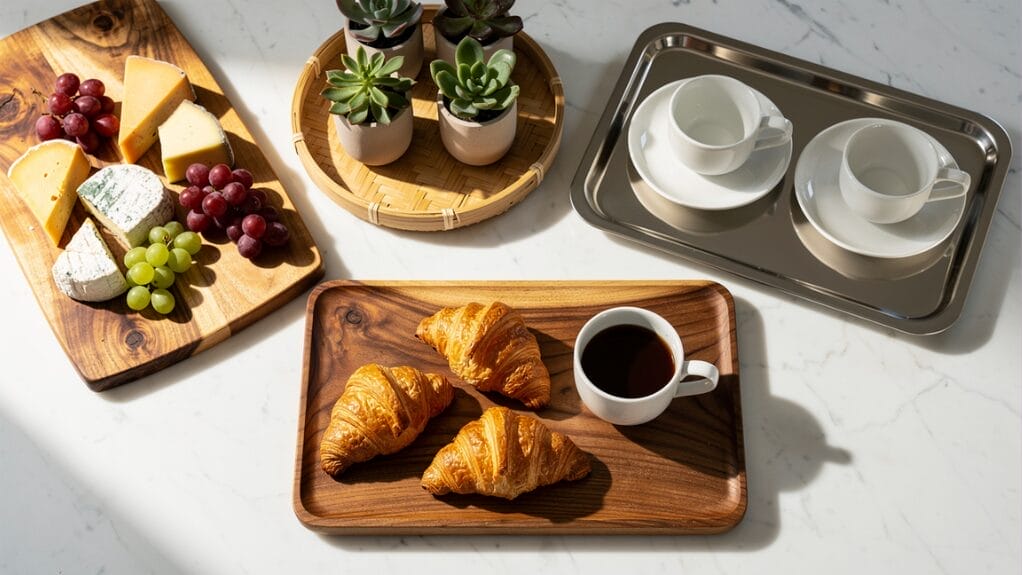
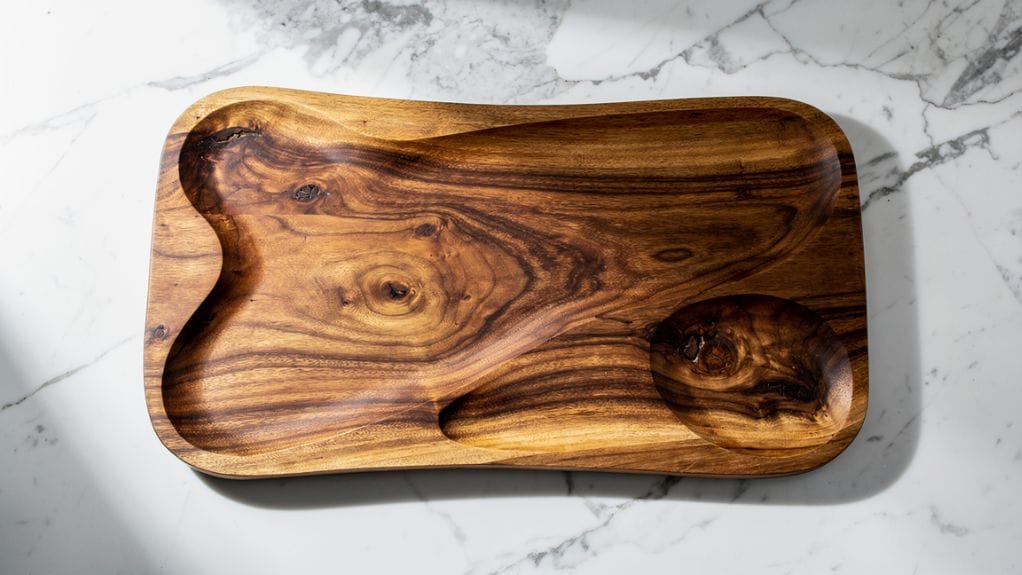
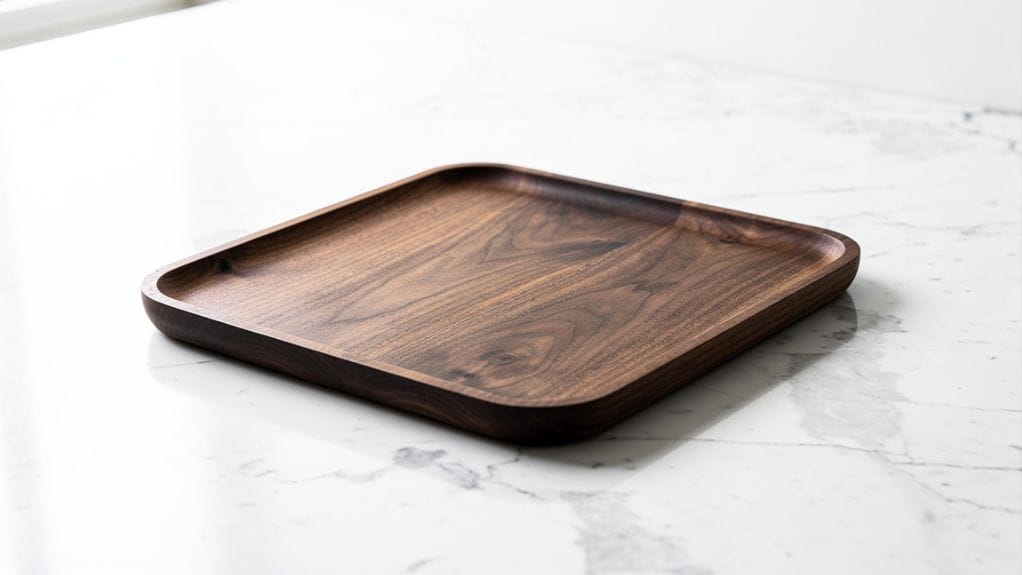
Are you losing sales because your serving tray inventory does not match what customers actually need? Do you know the difference between a cafeteria tray and a hospitality room‑service tray, and why that detail connects directly to your margins? Those questions sit at the heart of serving tray measurements, even though the topic looks simple on the surface.
Many buyers treat trays as if one standard size will cover everything. That shortcut may seem easier for ordering and warehousing, but it often leads to trays that do not fit carts or dishwashers, wasted pallet space, and shoppers returning items that do not sit well on a coffee table or ottoman.
When you understand standard serving tray dimensions by shape and use case, you can stock with intent instead of guesswork. That means trays that glide onto cafeteria rails, bar trays that carry a full round of drinks safely, and wooden serving tray dimensions that look right in décor photos. The measurements in this guide reflect ranges commonly used by major manufacturers, so you start from proven numbers rather than trial and error.
“If the tray size is wrong, everyone notices — from the dishwasher to the guest.” — Senior foodservice operations consultant
Key Takeaways
- Standard rectangular tray sizes often range from about 10″ x 14″ for small trays up to roughly 25″ × 16″ for large catering and hospitality formats, covering fast food, restaurants, and home décor needs.
- Round serving tray dimensions usually fall between 11″ and 18″ in diameter: smaller circles suit cocktails or tea, while larger ones carry full drink rounds or serve as decorative bases.
- Specialty trays such as cafeteria, bar, breakfast, and bed trays use very specific patterns so they fit rails, racks, and laps safely and comfortably.
- Custom serving tray sizes let you define length, width, thickness, rim height, and compartments to match carts, buffets, or nested gift sets; makers like Qlychee Crafts support this with low minimums and quick sampling.
- Surface area is only one factor; rim height, tray weight, handle layout, and overall footprint all affect how a tray works in real service and how buyers feel about it.
Understanding Standard Serving Tray Dimensions By Shape
Shape is the starting point for any serious talk about serving tray measurements. The same length and width behave very differently on a rectangular tray compared with a round or oval one.
Each shape suits a different mix of restaurant, hospitality, and home décor tasks, so your inventory should reflect how buyers plan to use the trays.
1. Rectangular Serving Tray Dimensions
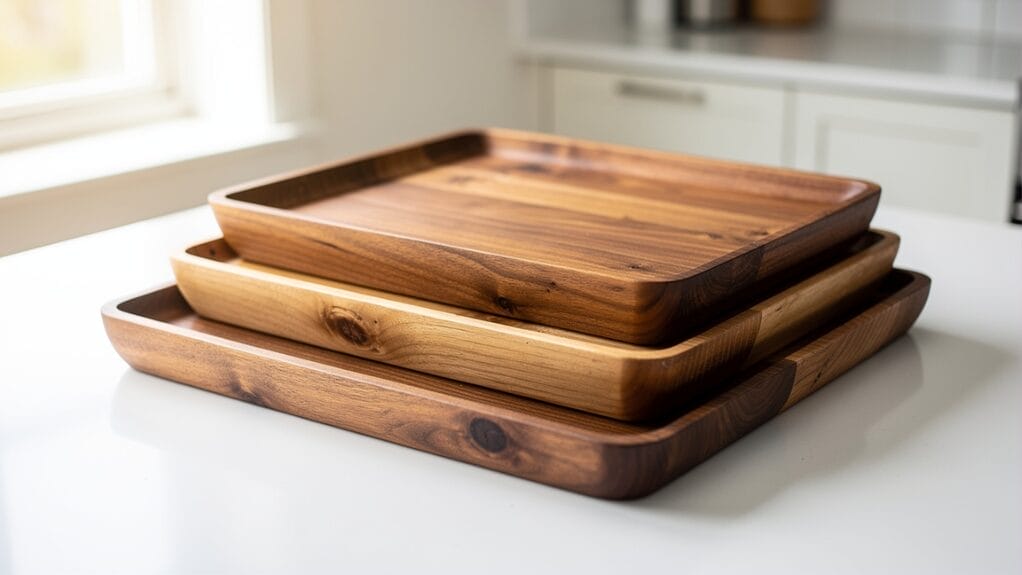
Rectangular trays are the workhorse of restaurants, cafeterias, and many homes. They offer strong usable surface area for their footprint and stack neatly, which matters for warehouses and back‑of‑house shelving.
Typical ranges are:
1. Small rectangular trays
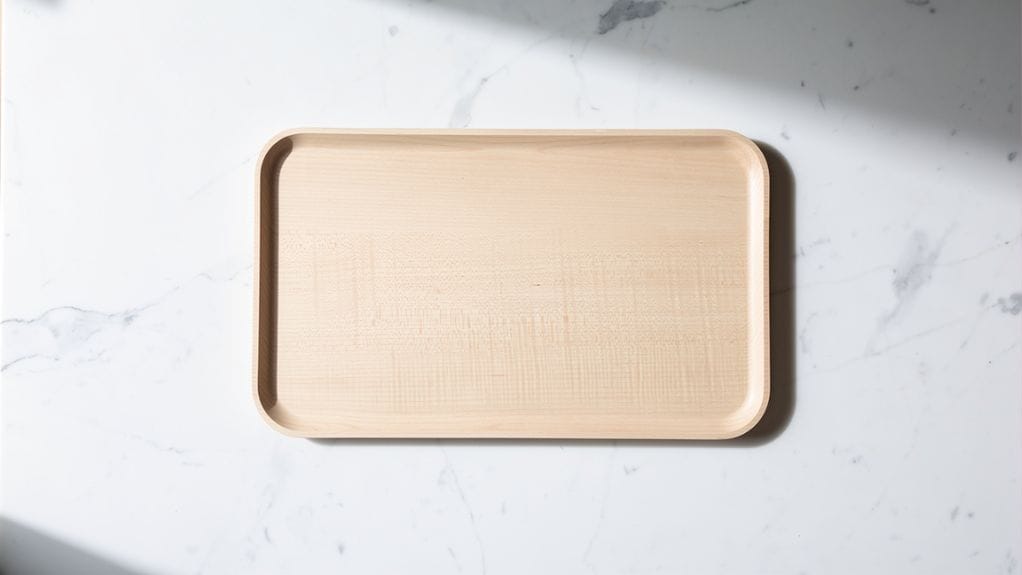
About 10″–14″ long and 7″–12″ wide, with common examples such as 10″ × 14″ or 12″ × 7.25″. These work well for a single meal, a small breakfast in bed, or a compact coffee‑table setup.
2. Medium rectangular trays
Roughly 16″–20″ long and 12″–14″ wide, for example 16″ × 12″ or 18″ × 14″. Many restaurants treat this band as their standard day‑to‑day serving tray size.
3. Large rectangular trays
Starting around 20″ × 15″ and running up toward 20″ × 30″ or 25″ × 16″. These formats serve banquets, hotel room service, and catering lines moving several plates at once. Familiar cafeteria tray sizes sit here too, including 14″ × 10.75″, 16.25″ × 12″, and 17.5″ × 14″.
Because they adapt well to rails, counters, and carts, more than half of commercial trays fall into this rectangular group.
2. Round Serving Tray Measurements
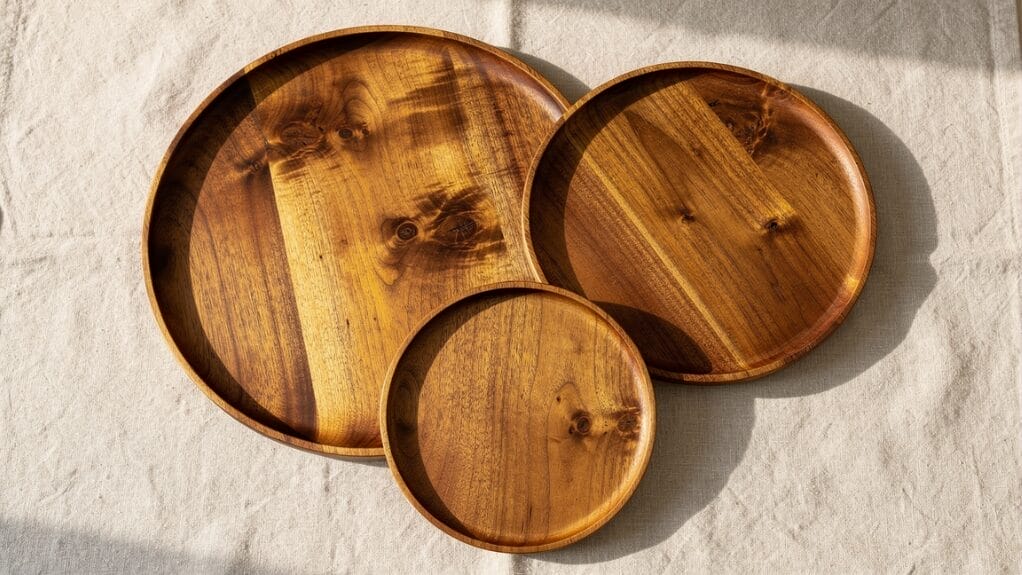
Round trays are measured by diameter, so you look at one number instead of separate length and width. This shape is common in beverage service and as a base for decorative styling because there are no corners to bump guests or furniture.
- Small round trays: about 11″–12″ in diameter for cocktails or tea service for two.
- Medium round trays: often 13″–16″ in diameter, used in restaurants and bars for several drinks or dessert plates.
- Large round trays: usually 17″–18″ and above, used in event service or as statement centerpieces.
Because they move smoothly through crowds, round trays are the default in many bar programs.
3. Square Serving Tray Dimensions
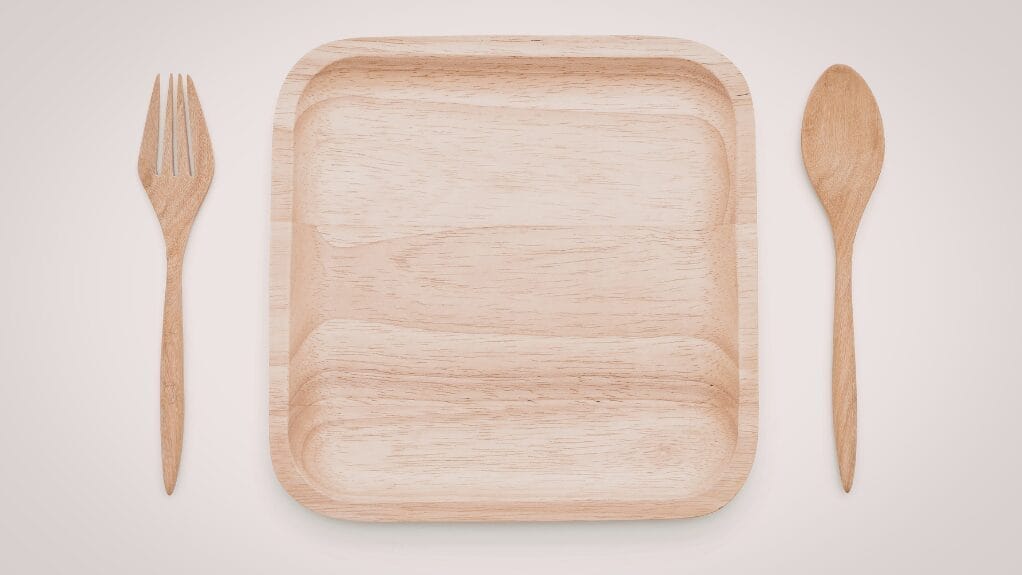
Square trays appeal to buyers who like a clean, modern look and symmetrical plating. Common square serving tray dimensions include:
- 12″ × 12″ for small settings
- 16″ × 16″ for family meals or larger drink sets
- 20″ × 20″ for buffets or display use
These sizes fit well in contemporary cafés and home décor assortments, especially on open shelving or coffee tables.
4. Oval Serving Tray Measurements
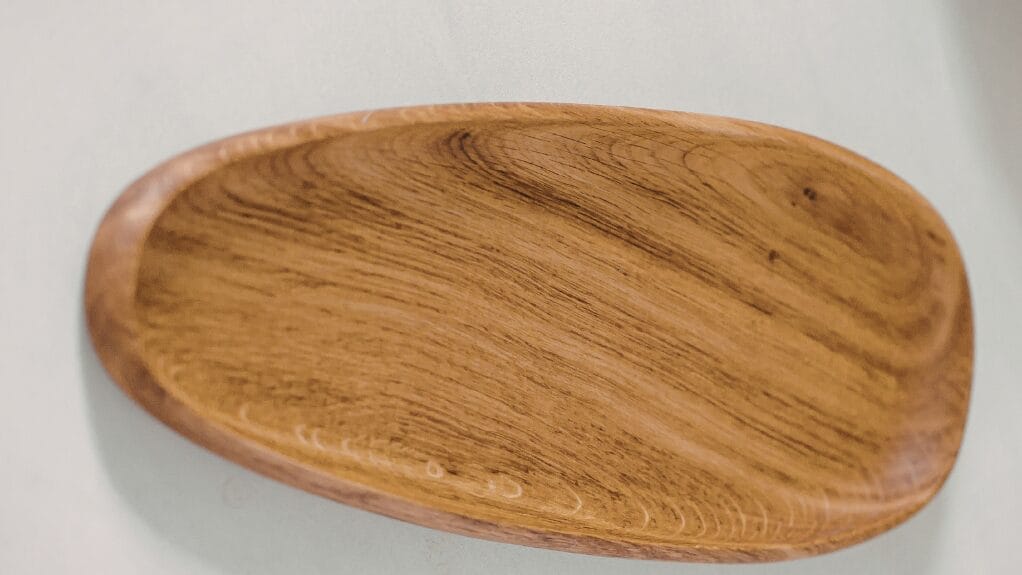
Oval trays live in a more specialized corner of the market. They are designed to carry many round plates along a long axis so servers can balance them on one arm in tight aisles.
Typical oval buffet tray dimensions include 25″ × 20″, 27″ × 22″, and 31″ × 25″. Because these trays often move heavy, dense loads, a non‑skid surface is a basic safety feature. While square and oval shapes represent smaller volumes, they are important for a complete commercial line.
Specialty Serving Tray Measurements for Commercial Applications
Once you move past basic coffee‑table tray measurements, the discussion shifts from looks to function. Specialty trays have measurements shaped by years of service in schools, bars, hotels, and homes. If a tray does not fit the rail, the rack, or the lap, it does not work, no matter how nice the finish may be.
Fast Food and Cafeteria Tray Dimensions
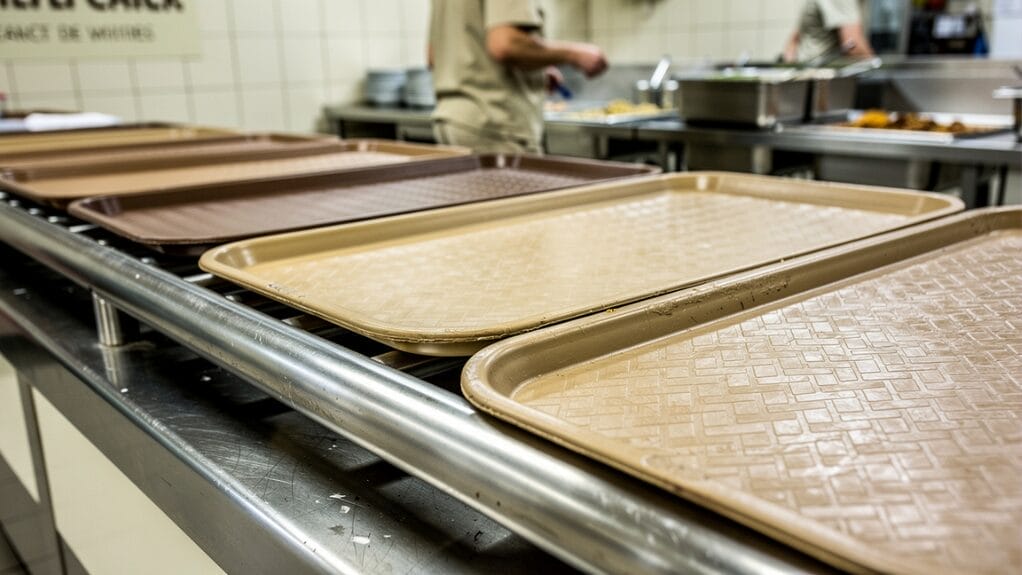
Fast food and cafeteria trays follow some of the most consistent serving tray measurements on the market. Common rectangular sizes include:
- 14″ × 10.75″
- 16.25″ × 12″
- 17.5″ × 14″
Some lines also include a 17″ × 14″ tray with molded cup recesses for up to four drinks. Beyond length and width, typical traits are:
- Textured or basket‑weave surfaces to resist slipping
- Lightweight plastic construction
- Nesting shapes that stack tightly on counters and in dish racks
These dimensions serve school cafeterias, food courts, quick‑service chains, and workplace dining rooms.
Bar and Drink Service Tray Measurements
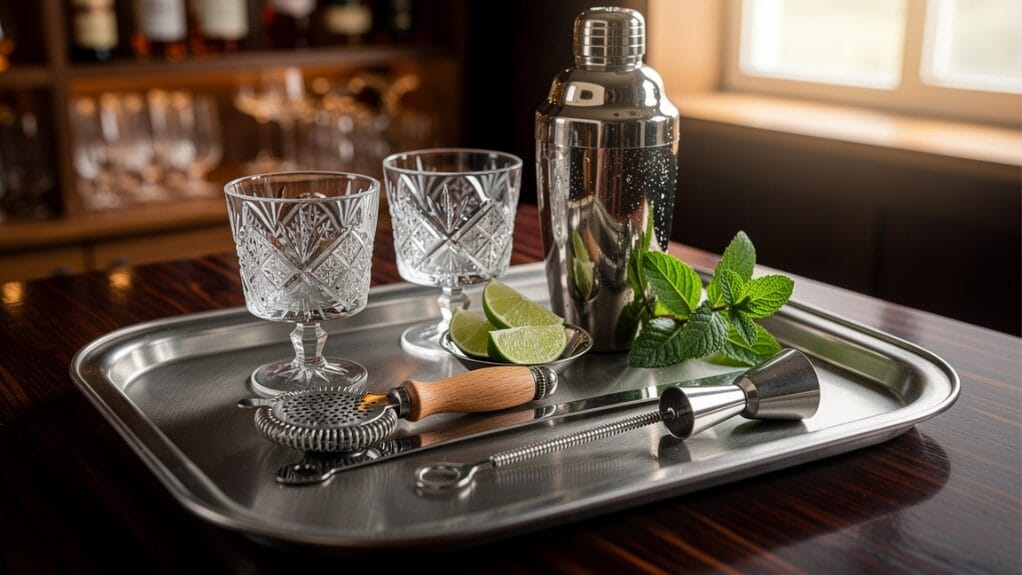
Bar trays are built around drink safety and stable handling.
- Rectangular bar trays commonly measure about 18″ × 12″, providing space for bottles and snack plates without feeling clumsy.
- Round bar trays generally range from 11″ to about 16″ in diameter, with sizes near 11.25″ popular for busy cocktail service.
The key feature is a non‑skid surface, often cork or a rubberized layer that grips glass bases. Rim height usually sits between roughly 0.75″ and 1″, high enough to catch minor spills and keep glasses from sliding off.
Breakfast and Bed Tray Dimensions

Breakfast and bed trays add height to the list of important serving tray dimensions.
- Tray surfaces typically span from about 16″ × 12″ for compact breakfasts to around 27″ × 14″ when you want room for a full meal plus a laptop or book.
- Leg height when unfolded usually lands around 10″–10.25″, so the tray clears the lap comfortably.
- Most breakfast trays weigh between 2 and 4 pounds, so they feel light enough to move but steady on the lap.
These pieces sell well for home‑goods retailers, hotel gift shops, and online décor stores.
Room Service and Hospitality Tray Dimensions

Room‑service trays blend presentation and practicality. Common sizes are:
- Around 15″ × 11″ for compact continental breakfasts
- Around 19″ × 14.25″ for standard meals
- Around 25″ × 16″ for multi‑course setups
Rim heights typically sit between about 1.5″ and 2″ to keep dishes secure while staff wheel carts along hallways. Many of these trays are hardwood or durable non‑skid plastics that mimic wood grain. Integrated ergonomic handles extend slightly beyond the rim, so it is smart to consider handle‑to‑handle measurements when planning cart and shelf space.
Key Measurement Factors Beyond Length and Width
Length and width get most of the attention in catalogs, but professional buyers look at a fuller set of serving tray measurements. Two trays with the same footprint can behave very differently once rim height, weight, and handle design enter the picture.
Thinking in terms of a complete dimensional profile changes how you review samples and spec sheets. You start to ask how deep the rim feels with soup, how heavy the tray becomes when loaded, and whether handles add unexpected inches that break cart compatibility.
Rim Height and Depth Considerations
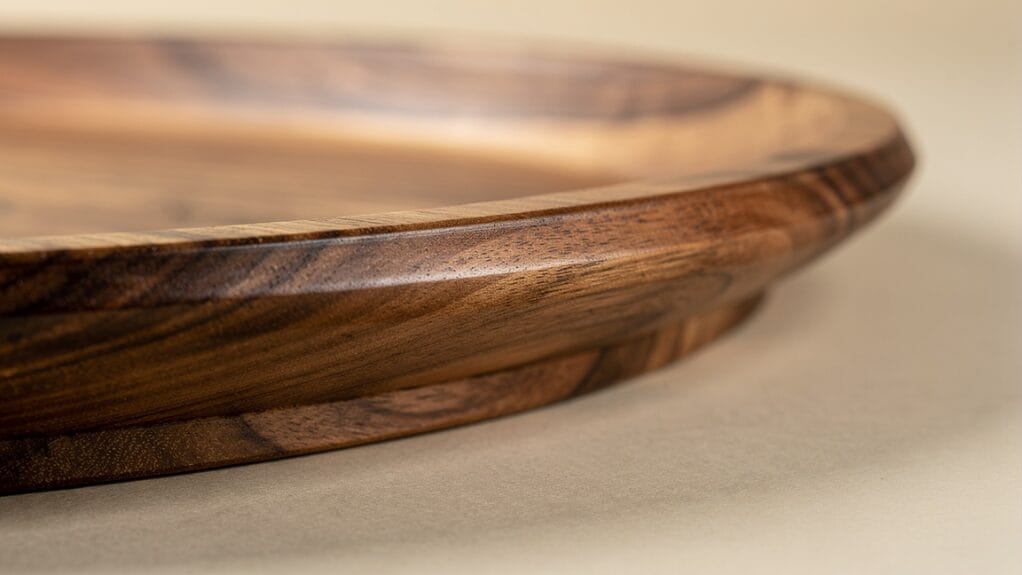
Rim height shapes how safely a tray carries food and drink:
- Low rims (about 0.5″–1″) give a sleek, platter‑like look that suits pastries and finger foods but do little to contain spills.
- Standard rims (about 1.25″–2″) are the most practical for daily service, keeping glasses and plates from sliding off and catching small spills. Many café and hotel trays sit here.
- Deep rims (about 2.5″ and higher) offer the most security when trays may be bumped or heavily loaded, such as tall‑sided wooden room‑service trays or condiment carriers.
Remember that higher rims add to overall tray height and affect how many pieces you can stack.
Weight and Material Density
Tray weight changes how staff feel during a shift:
- Lightweight trays (about 0.5–2 lb) often use plastics, melamine, or thin metal. A 14.5″ × 11.25″ plastic tray well under a pound can be carried all day in a cafeteria.
- Mid‑weight trays (about 2–5 lb) rely on hardwood or thicker aluminum. A medium hardwood tray in the 13″ × 10″ range might sit under a pound empty, while larger room‑service trays move into the 2–4 lb bracket.
- Heavy trays (5 lb and above) appear in dense stainless steel, thick glass, or very large hardwood formats, such as a 23″ × 17″ solid wood tray. These look premium but are better for buffets and displays than long carrying distances.
Matching tray weight to staff and use case keeps service smoother and safer.
Handle Design and Overall Tray Footprint
Handles change both usability and storage math.
- Cutout handles carved into the side walls give a solid grip without adding much to the outer dimensions.
- Raised handles often extend an inch or more beyond the tray edge and can increase total length or width by one to three inches.
When you review serving tray dimensions, ask for handle‑to‑handle measurements, not just the flat base. That number decides whether a tray fits on a cart, into a box, or alongside other serveware on a shelf. Ergonomic handles are especially important for room‑service and catering trays.
Custom Serving Tray Measurements When and Why
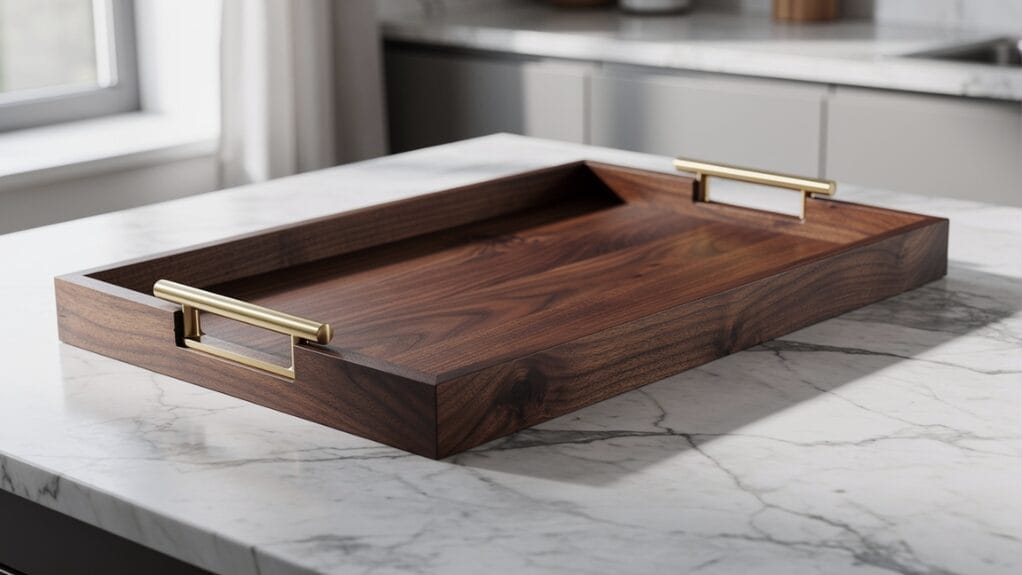
Standard tray sizes cover most daily needs, but some projects call for custom serving tray sizes. You might need dimensions that match a special cart, a narrow buffet line, or a new brand story you want to show in photos. Custom work is no longer limited to huge retail chains.
Common Reasons to Go Custom
- Retail differentiation: a small or rectangular serving tray size that competitors cannot source off the shelf gives you proprietary SKUs and less direct price pressure.
- Operational fit: custom lengths and widths help restaurant and hotel chains fit trays into existing carts, dishwashers, or storage cubbies.
- Nested sets: two or three trays in the same style, designed to stack inside one another for gift packs or coordinated décor sets.
- Packaging and freight efficiency: dimensions tuned to cartons can reduce wasted space and lower shipping costs.
Customization also covers thickness, rim height for spill control, and interior pockets for snacks, sauces, or office supplies, across rectangles, ovals, circles, and organic forms.
Customization Options from Qlychee Crafts
Qlychee Crafts focuses on custom wooden serving tray dimensions for wholesale and B2B clients. You can:
- Specify exact length, width, height, and thickness
- Choose shapes from clean rectangles to ovals and softer organic forms
- Add compartments or cutouts where you need them
Typical minimum order quantities often fall between about 100 and 500 units, with small sample runs of roughly 5–10 pieces so you can test a design and photograph it before launch. Samples usually ship in about one to one and a half weeks, and standard production often lands in the 20–30 day range. Working directly with the maker keeps pricing competitive enough for premium positioning.
Conclusion
Serving tray measurements may look like a minor detail, but they grow from years of commercial trial and error. Every common cafeteria size, bar diameter, and breakfast tray height reflects real use in schools, restaurants, hotels, and homes.
A strong product mix balances standard tray sizes with specialty and custom options. Rectangular formats around 16″ × 12″, round trays near 14″–16″ in diameter, and familiar cafeteria and bar dimensions will drive most of your volume. From there, breakfast, buffet, and decorative tray sizes help you serve focused niches, while custom measurements give you SKUs only your catalog carries.
If you match shape, surface area, rim height, weight, and handle design to real use cases, your trays fit carts and counters better and generate fewer complaints. As you review your lineup, look for gaps where a clearer fit could raise repeat business. When you are ready to test new measurements without large risk, a maker like Qlychee Crafts can supply both proven standards and flexible custom wooden trays with low minimums so you can experiment before scaling.
FAQs
Question 1: What Is the Most Common Serving Tray Size for Restaurants?
For many restaurants, a rectangular tray around 16″ × 12″ is the most versatile day‑to‑day option. In round formats, diameters between about 14″ and 16″ balance capacity and maneuverability for table and drink service.
Cafeteria‑style venues often use 14″ × 10.75″ or 17.5″ × 14″ meal trays, while bar programs favor round trays between 11″ and 16″ with non‑skid surfaces.
Question 2: How Do I Measure a Serving Tray Correctly?
- For rectangular or square trays, place a tape along the longest outer edge to record length, then along the shorter outer edge for width.
- With round or oval trays, measure across the widest point from rim to rim to get the diameter or overall width.
- To capture depth, measure vertically from the flat base up to the top of the rim.
- If handles extend past the rim, measure from the outer tip of one handle to the other so you know the full footprint for storage and cart planning.
Question 3: What Size Serving Tray Is Best for Breakfast in Bed?
A standard breakfast tray size around 16″ × 12″ usually gives enough room for a plate, cup, and a few extras. Larger bed trays near 27″ × 14″ add space for a laptop or book alongside the meal. Look for leg heights close to 10″ so the tray clears the lap and weights in the 2–4 lb range for a stable yet easy‑to‑carry feel.
Question 4: Can I Order Serving Trays in Custom Measurements for My Business?
Yes. Custom serving tray measurements are realistic for wholesalers, retailers, and hospitality buyers. Manufacturers such as Qlychee Crafts offer custom wooden serving tray dimensions with minimums that often start between about 100 and 500 units.
You can define length, width, height, thickness, rim depth, and compartment layouts, and test short sample runs of around 5–10 units before committing to a larger order.
Question 5: What Is the Difference Between a Serving Tray and a Serving Platter in Terms of Dimensions?
A serving tray almost always includes raised edges, usually about 0.5″–2.5″ tall, so it can contain spills and keep items from sliding during transport. Many trays also include cutout or raised handles that extend the overall footprint.
A serving platter is usually flat or has only a very low lip, often around 0.25″ or less, and it is meant to stay on a table instead of moving through a room. Platter dimensions focus on usable surface area for food presentation, while tray dimensions include the rim and handle details that make carrying practical.