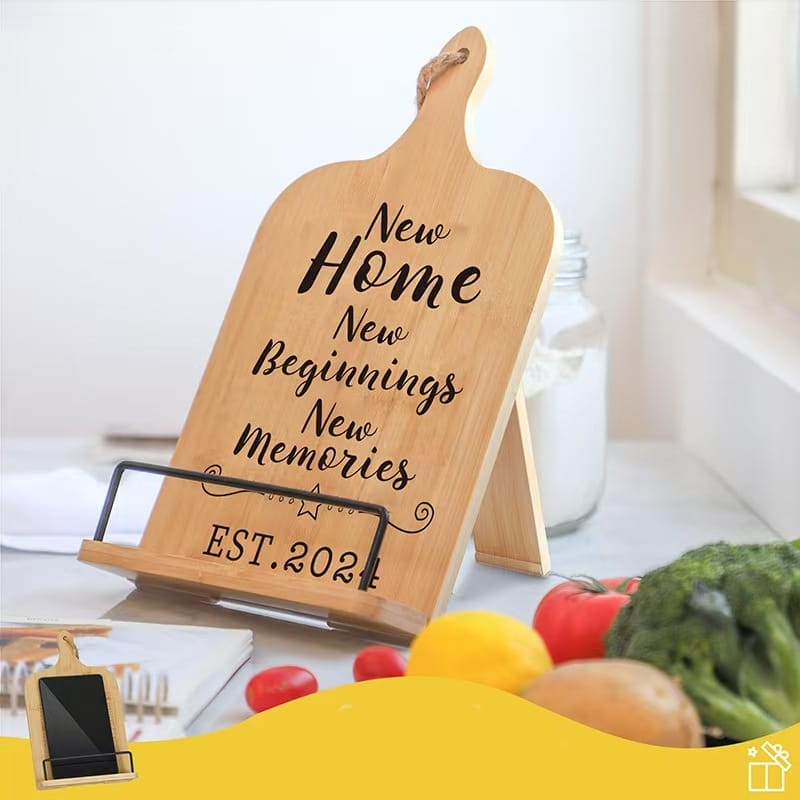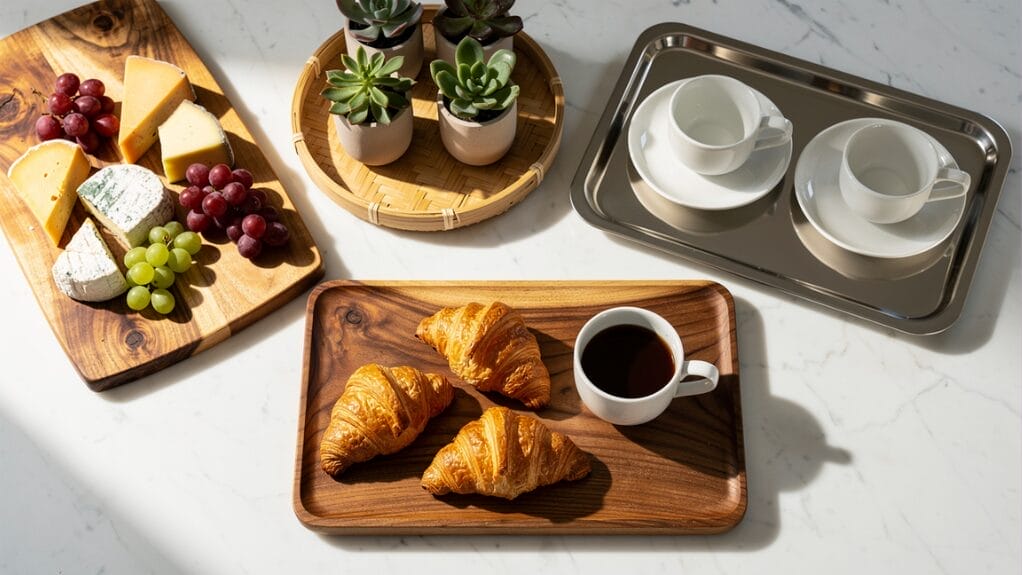
The tray that carries a latte to a hotel guest or frames a charcuterie board in a product photo does far more than move items from A to B. It shapes how people feel about your brand, how smoothly your team works, and how often guests come back. That is why understanding the main types of trays is a real business decision for any food service or retail brand.
When people talk about types of trays, they usually mean three things at once:
- Trays grouped by material (wood, metal, ceramic, plastic or melamine, and eco‑friendly fibers)
- Trays grouped by function (serving, display, commercial utility, and niche uses)
- Trays built for specialized roles, from deli platters to distillation trays in industrial columns
This guide walks through material‑based trays, functional categories, and niche commercial uses so you can choose with confidence. You will also see how Qlychee Crafts supports you with customizable wooden trays, low minimum orders between 100 and 500 units, and documented sustainable sourcing. By the end, you will be ready to match the right trays to your menu, store, and margins.
Key Takeaways
- The main types of trays fall into five material groups: wood, metal, ceramic, plastic or melamine, and eco‑friendly fibers. Each changes durability, weight, and style, so matching material to menu and setting is a smart way to fine‑tune guest experience.
- Function matters as much as material. Serving trays, display trays, utility trays, and specialized designs such as compartment or deli trays support different workflows. A planned mix keeps servers quick, counters tidy, and presentations consistent.
- The choice between reusable trays and disposable food packaging trays touches cost per use, sanitation steps, and your sustainability message. Long‑lasting wood, steel, ceramic, and melamine options cut waste, while bagasse and other eco‑friendly disposables keep quick service simple.
- Qlychee Crafts offers a wide wooden tray portfolio with low MOQ, strong customization, and bamboo options with FSC‑equivalent documentation. You can specify sizes, compartments, finishes, and branding so trays act as both serving tools and quiet brand markers.
Types of Trays by Material: The Right Match for Your Business
Material is the fastest way to group the many types of trays on the market. It shapes how a tray feels in the hand, how long it lasts, and how it looks in photos. For wholesale buyers and managers, this choice touches cost, staffing, and brand image at the same time.
1. Wooden Trays: Natural Elegance and Versatility
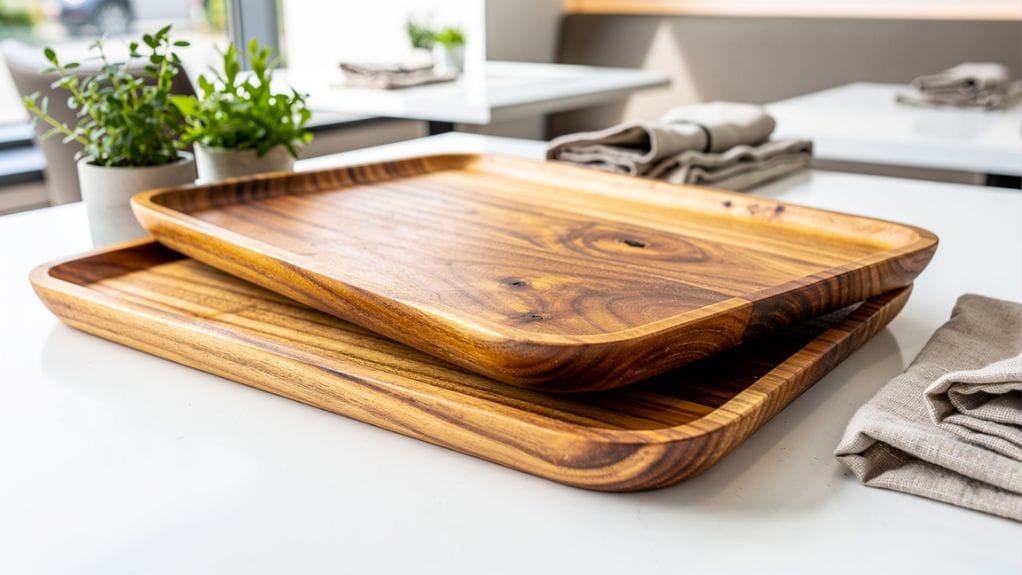
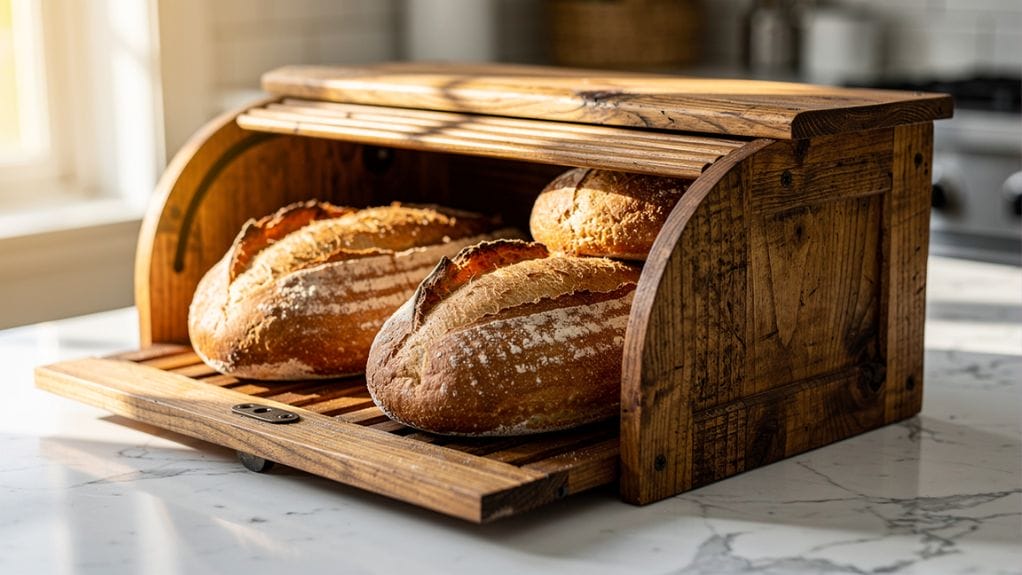
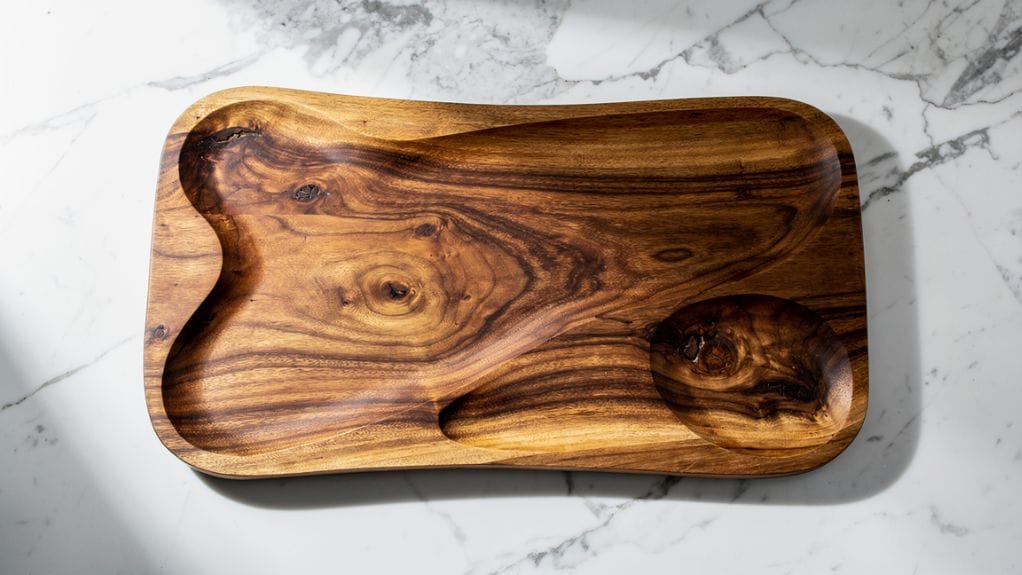
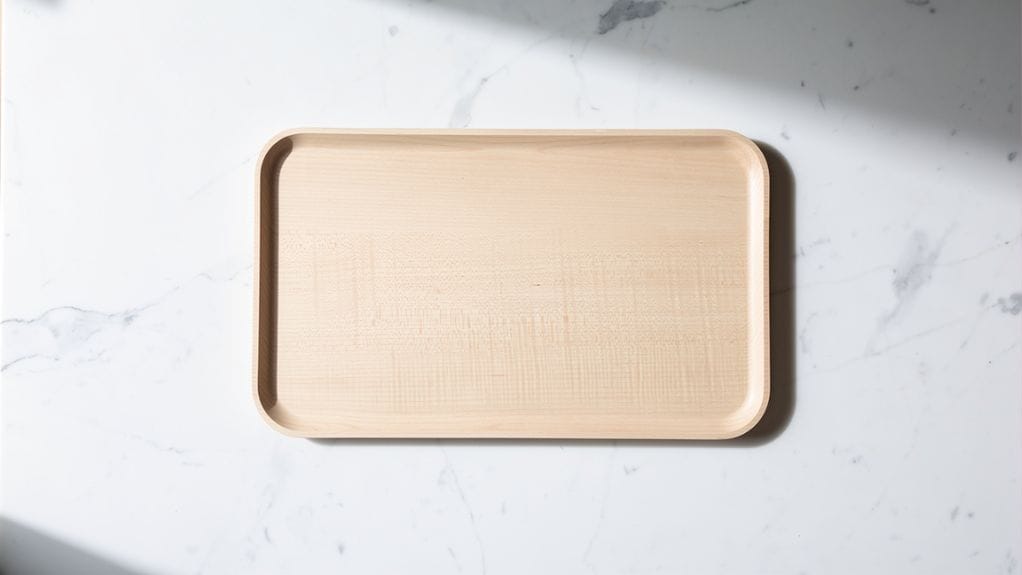
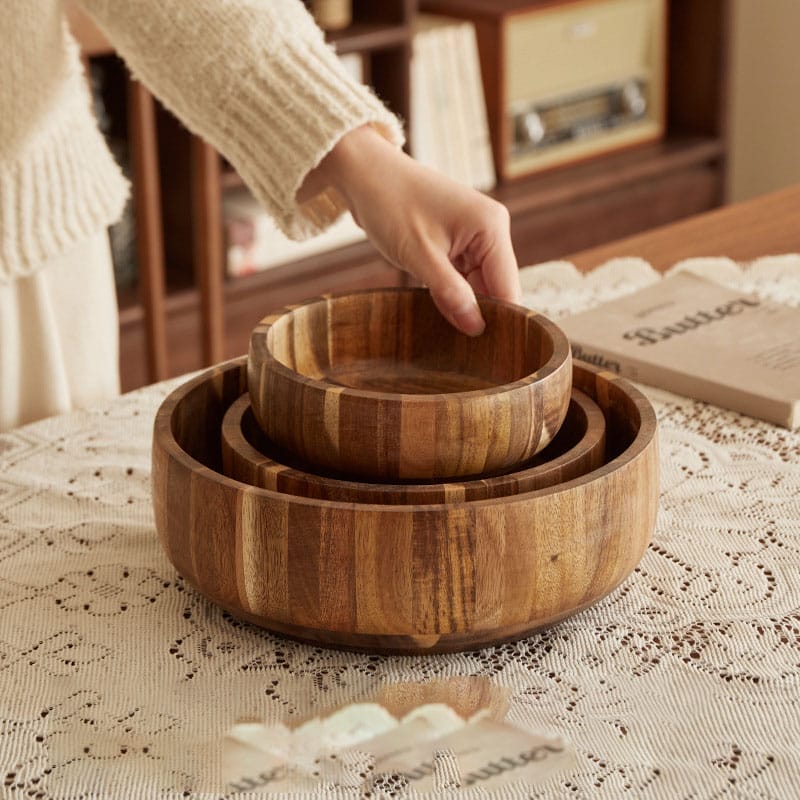
Wooden trays add a warm, rustic, and natural character that suits both casual and refined spaces. Hardwoods such as acacia bring rich grain for appetizers, dessert flights, and cheese boards. Maple is dense and smooth for serving platters and bread boards, while lighter woods accept stain or paint when you want specific colors.
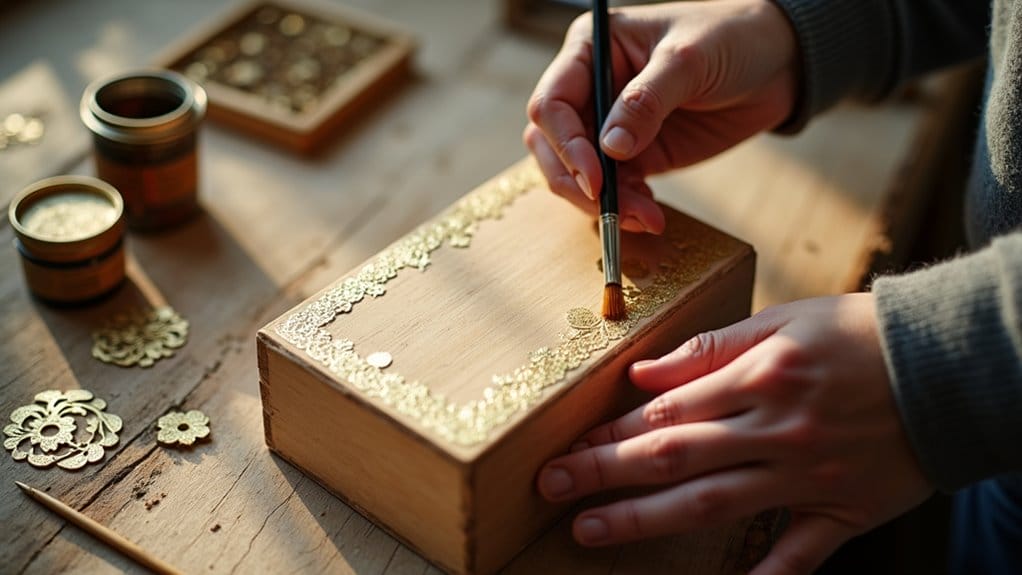
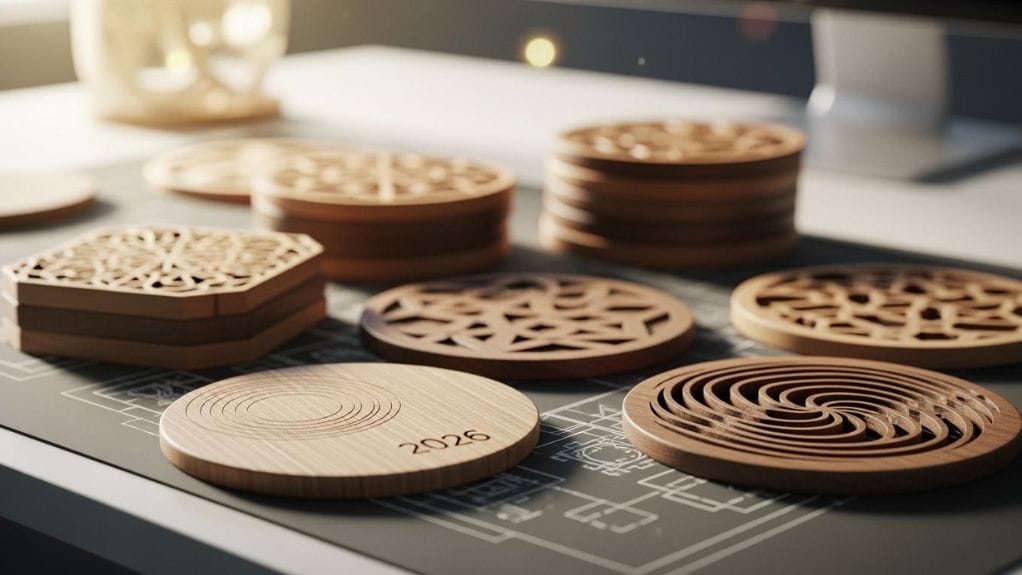
Qlychee Crafts focuses on this category, using CNC cutting for accurate shapes and clean edges, then laser engraving for logos or patterns. Food‑grade oil and wax finishes meet common US expectations, so you can place dry or cool food straight on the board. Each piece shows its own grain, which gives product photos and restaurant tables a natural, distinct look.
With low custom MOQs between 100 and 500 units, you can test ottoman trays, narrow bread boards, or multi‑compartment snack boards without tying up much capital. Qlychee Crafts also offers bamboo trays with FSC‑equivalent documentation and legal sourcing records to support eco‑focused programs.
2. Metal Trays: Durability for High‑Volume Operations

Metal trays are workhorses in many kitchens and clinical settings.
- Stainless steel stands out for heat and corrosion resistance, so it suits surgical trays, hotel pans, and modern metal serving trays that move from kitchen to table.
- Aluminum is lighter and conducts heat well, making it common in baking trays and takeout pans.
- Brass and iron trays lean toward display and serving in hotels or themed restaurants, often with hammered surfaces for visual interest.
These metals can look striking but may need polishing or extra care. Over time, sturdy metal trays often cost less per use than cheap disposables because they handle daily washing in busy kitchens and cafeterias.
3. Ceramic, Stoneware, and Porcelain: Oven‑to‑Table Sophistication

Ceramic, stoneware, and porcelain trays shine when you want oven‑to‑table service with strong visual impact.
- Stoneware tends to be sturdy and chip-resistant, making it a good pick for baking dishes and casserole trays.
- Porcelain gives a lighter, refined look for formal dining or upscale dessert service.
You can choose from matte, glossy, and hand‑decorated finishes, so tableware can echo your brand colors or concept. Just remember these trays are heavier than plastic or melamine, which matters when servers carry several at once.
4. Plastic and Melamine: Cost‑Effective Utility

Melamine and plastic trays are common in schools, hospitals, and food courts where volume and durability matter more than fine detail. Melamine is light and resistant to chipping, so it works well for fast-food trays, cafeteria trays, and poolside service where drops are frequent.
Many trays in this group have textured, non‑slip surfaces to help staff carry multiple items safely. You can order them in many colors to code zones, menus, or brands, which helps staff and guests spot items at a glance.
5. Eco‑Friendly Materials: Meeting Sustainability Demands
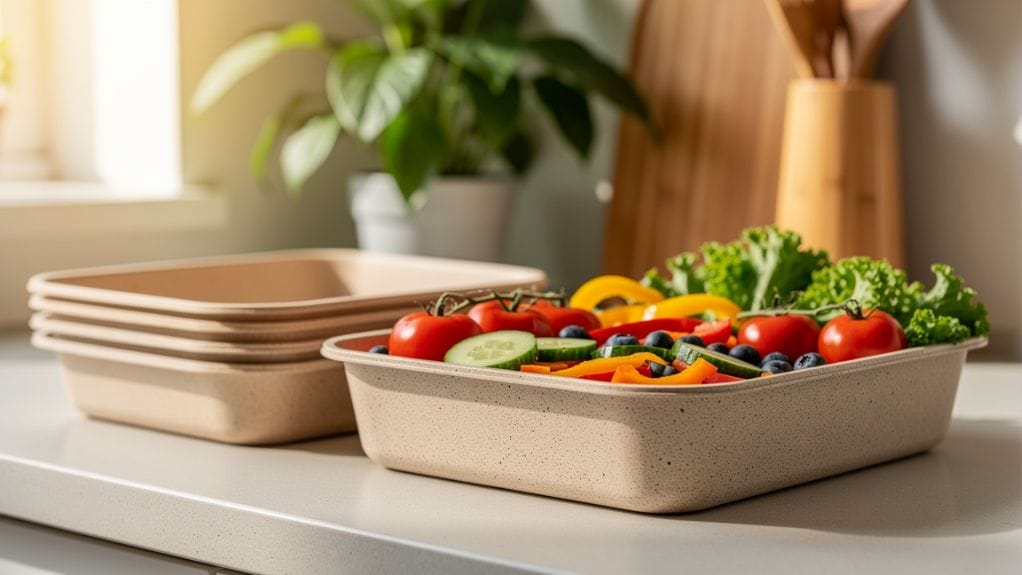
Eco-friendly trays let you keep speed and convenience while cutting long‑term waste.
- Bagasse trays, made from sugarcane fiber, are strong enough for hot and cold food, handle the microwave, and break down in composting systems. This makes them a good fit for quick service spots that want greener packaging without changing their flow.
- Molded pulp drink carriers and paperboard food trays remain common in coffee shops and stadiums because they are light and stack neatly.
- Palm leaf trays, pressed from fallen leaves, add an organic look for catered events and tasting menus.
- Starch‑based trays made from cornstarch offer another biodegradable route away from foam.
“Every packaging choice sends a message about your values.” Many sustainability consultants share this reminder with food service operators.
Many brands accept a slightly higher cost per tray in this group because the marketing value and customer loyalty from a clear sustainability demands can pay back over time.
Types of Trays by Functionality: Matching Form to Purpose
Material is only half the story. When you plan types of trays for your business, you also need to think about how staff will use them in daily service. A non‑slip serving tray, a dessert tier, and a deli tray might share materials but play very different roles.
Serving Trays: The Backbone of Food Service Operations
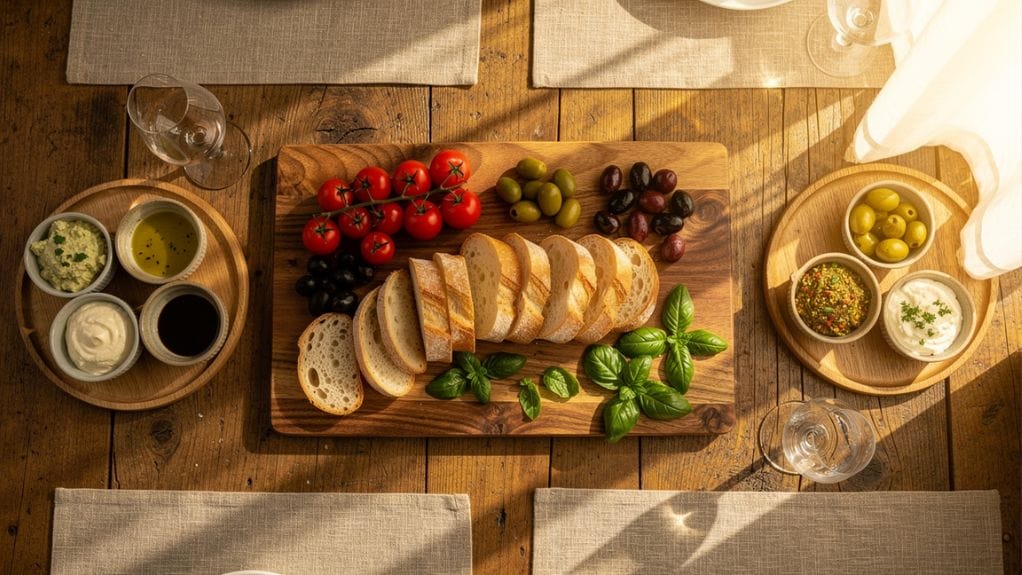
Serving trays sit at the center of most food service operations. Flat service trays with raised rims help servers carry full rounds of food and drinks, often with non‑slip surfaces that cut spill risk. Materials range from light plastic and fiberglass to wooden trays and metal pieces, chosen for weight, grip, and cleaning ease.
Butler’s trays go a step further with deeper sides and tray stands, so one piece can act as a portable side table. Hotels and caterers use these for room service, wine stations, or shared appetizers. Compartment trays, sometimes called mess trays, divide the surface so different food items stay separate, which works well for schools, hospitals, and buffet lines.
Qlychee Crafts supports these needs with hardwood trays that combine polished acacia, sturdy handles, and food‑safe finishes. Shapes with natural wood craft can help kitchen staff plate faster while giving guests a neat, styled look.
Display Trays: Maximizing Visual Appeal and Sales

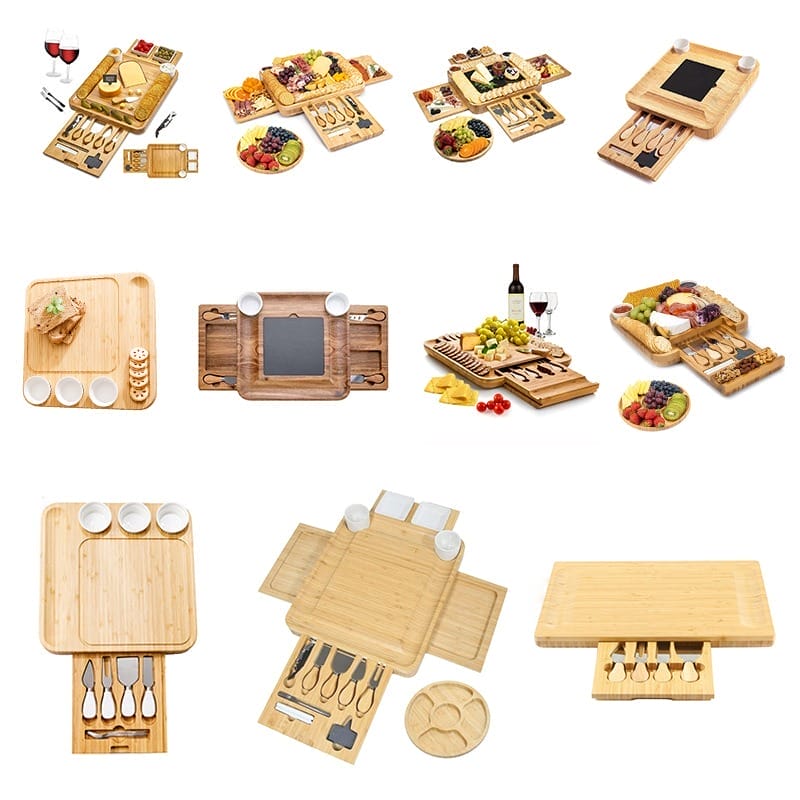
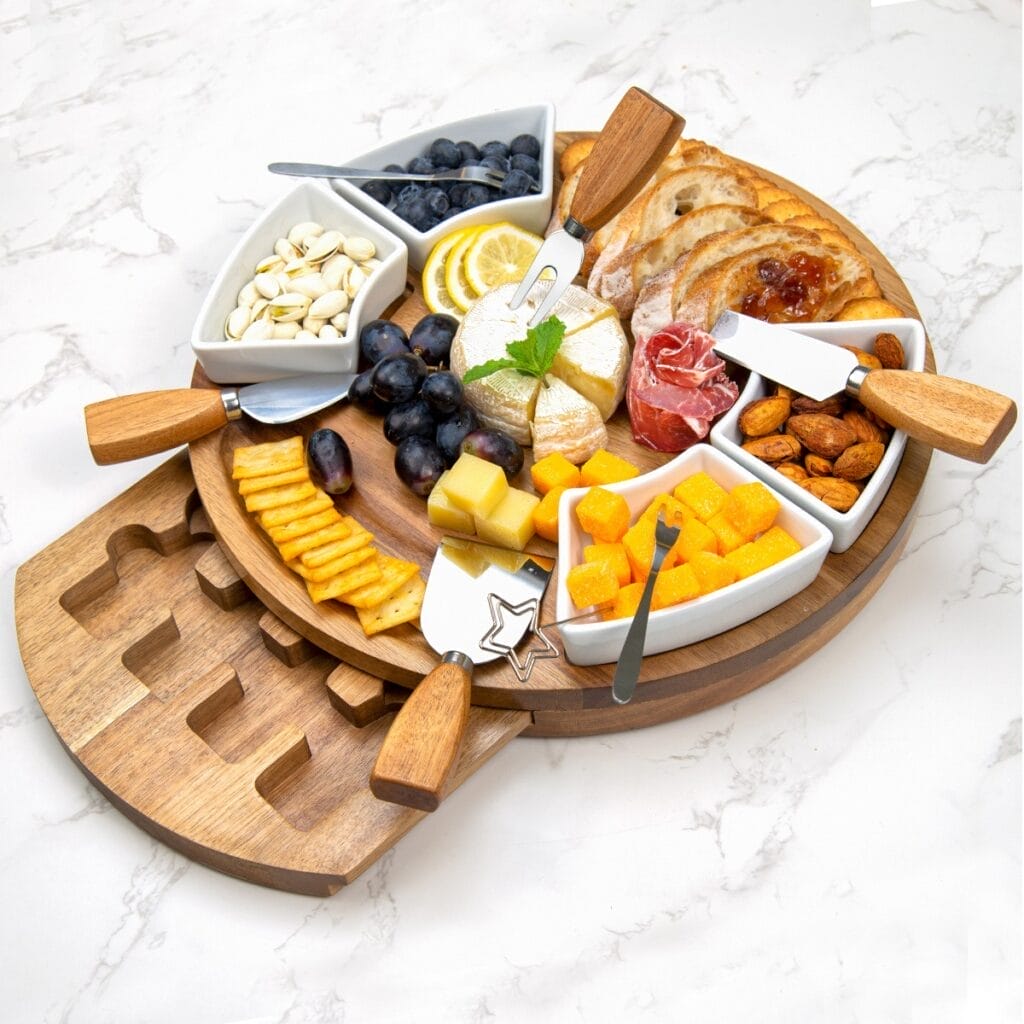
Display trays focus first on how items look, then on how they move. Appetizer and hors d’oeuvres trays show off finger foods at events, with long boards for sushi, round cheese boards, and charcuterie trays that turn a snack into a centerpiece. Dessert trays and tiered servers stack cookies, cupcakes, and pastries upward to save counter space while drawing the eye.
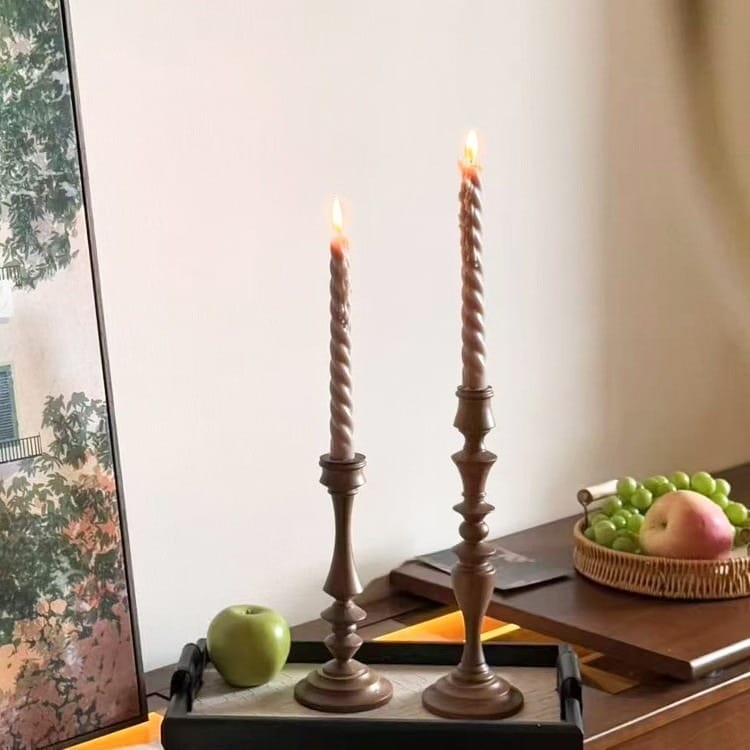
For retailers, a well‑chosen decorative tray can anchor a vignette with candles, textiles, and small gifts. On social media, wooden serving platters or marble trays often frame the shot, making food and decor look more polished than a bare table. Qlychee Crafts can laser engraving logos or patterns on these display trays so every shared image quietly carries your name.
Specialized and Utility Trays: Niche Applications

Beyond day‑to‑day food service lies a long list of specialized tray types. Tea trays organize pots, cups, and sugar for tidy service, while deli trays in supermarkets and catering operations present sliced meats, cheeses, and salads under clear lids. Deviled egg platters mold shallow wells for each piece, and coin trays help retail staff pass change without mix‑ups.
Many industries also rely on trays that never touch food. Stainless steel surgical trays and dental impression trays keep tools and materials organized for medical staff. Seed trays hold soil and seedlings in greenhouses, and cargo trays line vehicle backs to keep goods from sliding. In chemical plants, tray column distillation depends on specific distillation column tray types such as sieve trays, valve trays, and bubble cap trays inside columns.
Qlychee Crafts focuses on wood rather than heavy industry, but the same ideas apply. The factory can produce multi‑compartment wooden trays for corporate gifting, curated favor boxes, or retail packaging, all with low MOQ so you can test new concepts with limited risk.
Qlychee Crafts Wooden Trays: Your Wholesale Partner for Quality and Customization
When your business relies on wooden trays for serving, decor, or gifting, the right manufacturing partner matters as much as the right design. Qlychee Crafts works as a direct factory partner, combining hardwood strength with modern automation so you receive consistent products order after order.
Product Range and Materials/Finishes
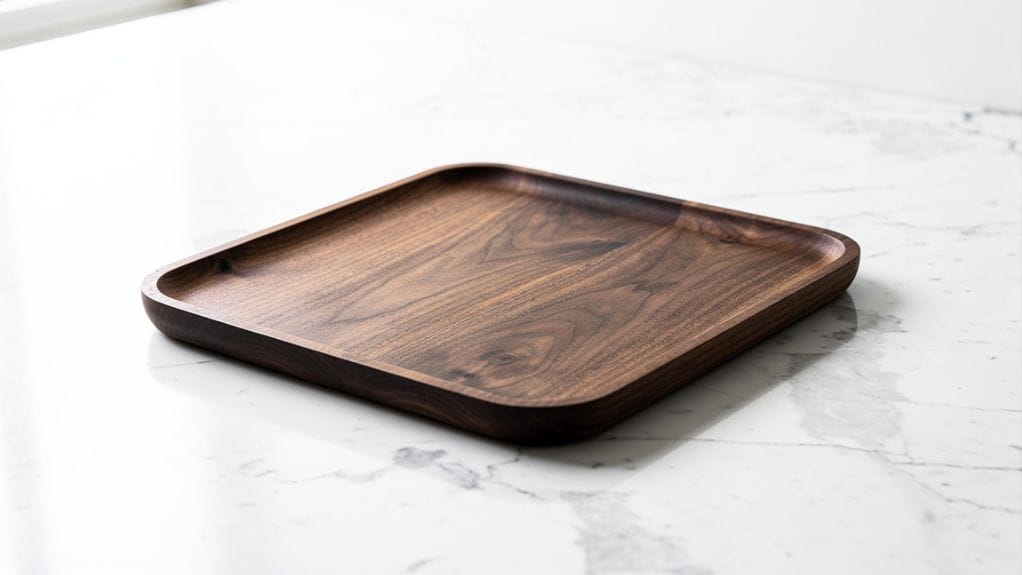
The tray range covers hospitality serving trays, decorative and ottoman trays, compartment boards, and specialty pieces such as charcuterie boards and desk trays. Materials include walnut, acacia, maple, and bamboo boards with FSC‑equivalent records, plus plywood or MDF for budget‑friendly decorative items. Food‑contact surfaces use food‑grade oils and waxes; non‑food trays can have stained or coffee‑tone finishes.
Customization
Customization is a major strength. You can define length, width, height, and thickness so custom wooden trays fit certain plates or shelving. Shapes can be rectangular, round, oval, or softly curved, including nested sets or tiered designs. Compartments range from one large pocket for bread to several wells for sauces, snacks, or office items, and laser engraving or epoxy inlay turns each tray into a visible brand touchpoint.
Lead Time and MOQs
Lead times support planning: samples usually ship within about a week, with standard production in the 20‑ to 30‑day range after sample sign‑off. Low MOQs of 100 to 500 units on custom orders and 5 to 10 units for samples let you test new types of trays before committing to volume.
Qlychee Crafts Wooden Tray Customization Options
| Customization Category | Available Options | Business Benefit |
|---|---|---|
| Dimensions | Custom length, width, height, thickness | Fit menu items, shelves, and packaging without wasted space |
| Shapes | Rectangular, round, oval, organic forms, nested, tiered | Match different serving styles and decor themes |
| Compartments | Single pocket, multiple wells, utensil slots | Keep food or items sorted and easy to access |
| Branding | Laser engraving, epoxy inlay, pattern work, custom colors | Turn every tray into a clear brand touchpoint |
| Finishes | Food‑grade oils and waxes, stained tones, oil‑resistant layers | Support food safety and simple cleaning routines |
| Packaging | OEM, private label, gift‑ready boxes, greener packing choices | Move straight into retail or gifting with less extra work |
| MOQ | About 100–500 units custom, 5–10 units for samples | Test new styles with lower financial risk |
Reusable vs. Disposable Trays: Strategic Business Considerations
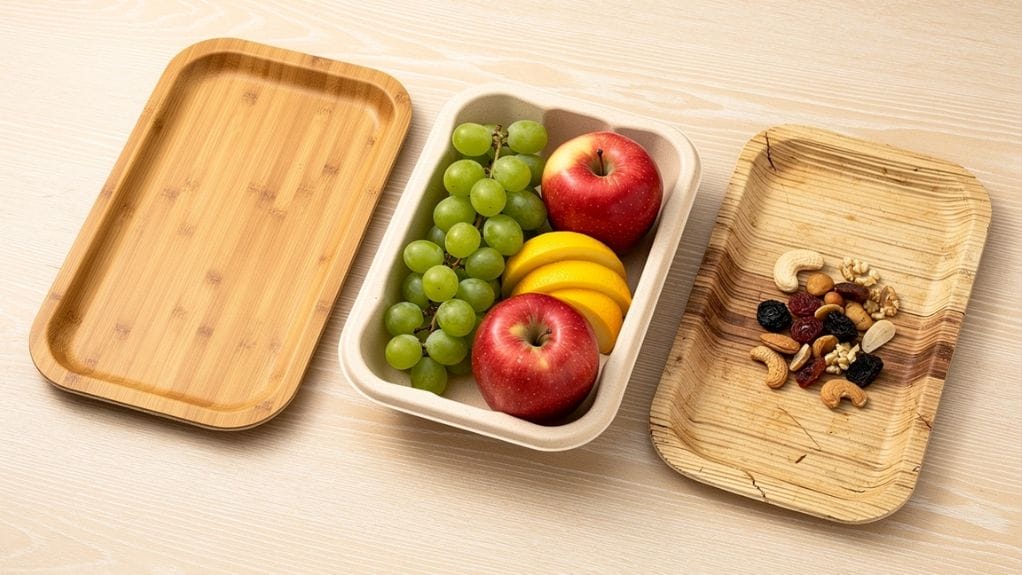
For many buyers, the biggest tray decision is whether trays should be reusable or disposable. This choice affects long‑term cost, staffing, and how guests view your care for the environment. Looking at the total cost of ownership instead of the sticker price gives a clearer picture.
Reusable trays made from stainless steel, hardwood, ceramic, or melamine cost more at first but can serve thousands of times with the right care. They often give a more polished look on the table, which supports higher menu prices and better reviews. They do, however, require dishwashing capacity, staff time, water, and storage space.
Disposable trays in plastic, paperboard, molded pulp, aluminum, or fibers like bagasse and palm leaf shine when speed and sanitation are top priorities. Each order leaves your counter with a fresh tray, and staff do not have to bus and wash returns, which suits food trucks, stadiums, and many takeout‑heavy locations.
Many brands pair reusable wooden trays for dine‑in service with eco‑friendly disposable trays for takeout. Qlychee Crafts supports that path with durable hardwood trays backed by documented sourcing and long service life.
Conclusion
Choosing the right types of trays is not just about filling shelves. It affects how servers carry food, how guests see your tables, how your brand looks in photos, and how much waste your business produces over time. When you weigh materials, functions, and the reusable versus disposable question, you shape both daily workflow and long‑term brand goals.
This guide covered core material groups—from wooden trays and metal trays to ceramic, melamine, and eco‑friendly bagasse trays—along with serving, display, and specialized tray roles. That structure helps you decide which trays fit a fast-food restaurant, a boutique retail line, a hotel breakfast setup, or a corporate gifting program.
Qlychee Crafts stands ready as a partner for the wooden side of those plans. With hardwood strength, flexible sizes, smart compartment layouts, rich finishes, and precise laser branding, the factory can shape trays that feel at home in both food service and retail spaces. Low MOQs and predictable lead times support steady growth instead of one‑off experiments.
If you are planning a new menu, refreshing store decor, or adding private‑label serving platters to your online shop, this is a strong moment to test custom wooden trays. Reach out to Qlychee Crafts for a small sample run between 5 and 10 units, review fit and finish in your own setting, and then scale the designs that best support your brand and your guests.
FAQs
Question 1: What Are the Most Durable Types of Trays for High‑Volume Commercial Use?
For very heavy commercial use, stainless steel trays usually offer the longest life thanks to strong resistance to heat and corrosion. Hardwood serving trays in acacia or maple also stand up well when finished with food‑safe, oil‑resistant coatings and cleaned by hand. Melamine trays add a light, shatter‑resistant option for cafeterias and self‑service counters.
Question 2: What Is the Minimum Order Quantity (MOQ) for Custom Wooden Trays from Qlychee Crafts?
For fully custom wooden trays with set dimensions, shapes, compartments, and branding, Qlychee Crafts typically works with MOQs in the 100‑ to 500‑unit range. Sample orders run much smaller, around 5 to 10 units, so you can photograph, test, and review before placing a larger order.
Question 3: Are Wooden Serving Trays Food‑Safe for Restaurant Use?
Wooden serving trays are safe for restaurant use when they are made from suitable woods and finished with food‑grade oils and waxes.
Qlychee Crafts uses finishes that meet common US expectations for food‑contact surfaces and can provide documentation for your safety checks. Hardwoods such as maple and acacia are naturally dense and work well for dry or cool food like bread, cheese, and charcuterie.
Question 4: Can I Add My Company Logo or Custom Branding to Wooden Trays?
Yes. You can add branding so trays act as daily reminders of your name. Qlychee Crafts offers precision laser engraving for logos, patterns, signatures, and short text once MOQ is met. Epoxy inlay designs and custom color work are also available for trays that need strong visual impact in retail or gifting.
Question 5: What Eco‑Friendly Tray Options Are Available for Businesses Committed to Sustainability?
If your business places a strong focus on greener choices, you have both reusable and disposable tray paths. Reusable wooden trays use fast‑growing hardwoods and bamboo from documented, legal sources, backed by FSC‑equivalent records for bamboo and low‑VOC, food‑safe oils.
On the disposable side, bagasse trays, palm leaf trays, and cornstarch‑based trays all support composting or faster breakdown than traditional plastics.