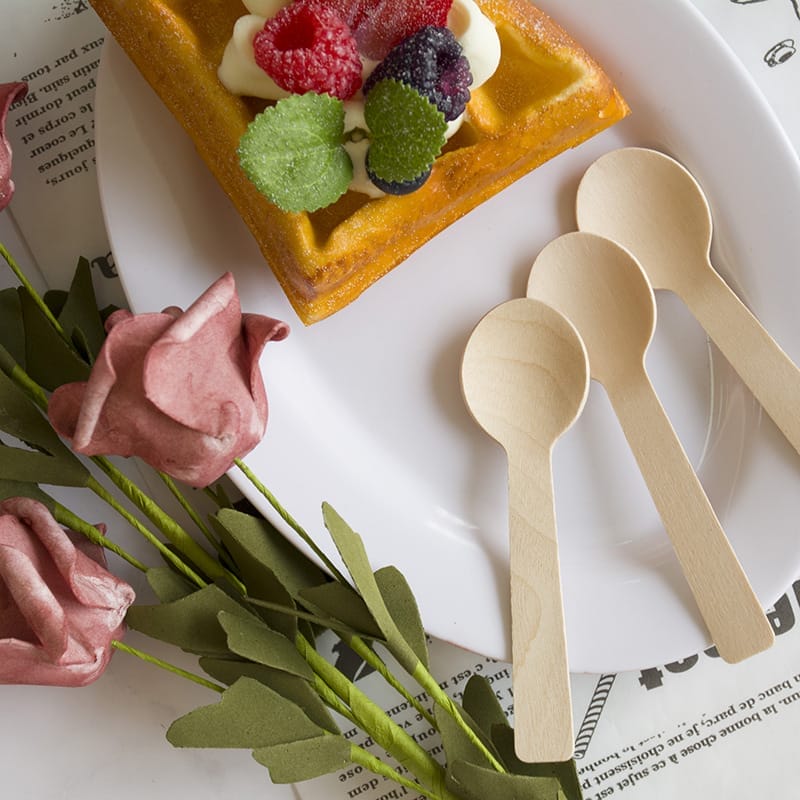
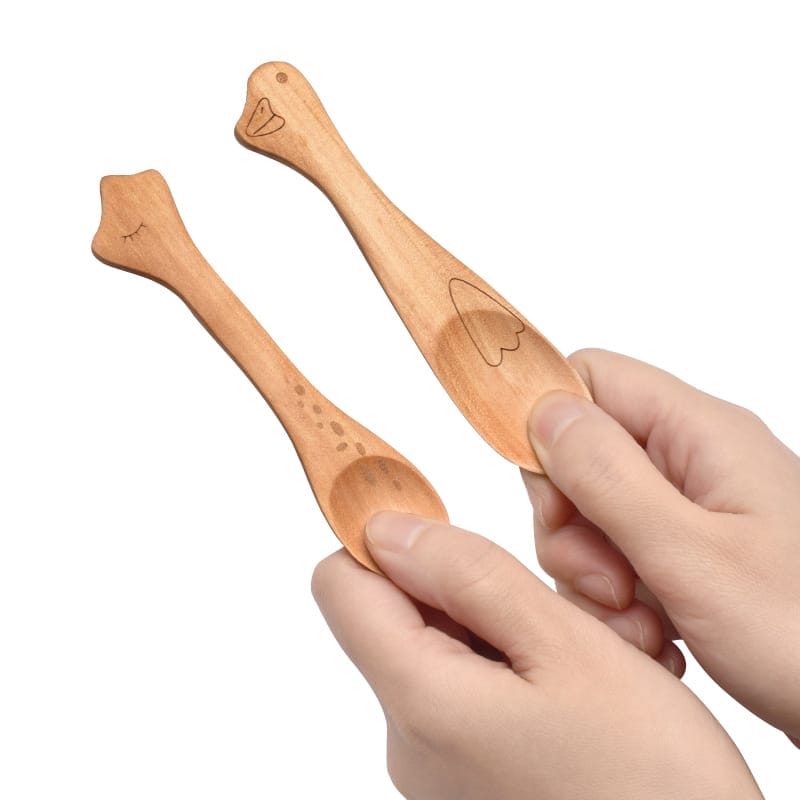
How are wooden spoons manufactured? We start by selecting premium hardwoods such as maple and beech, cutting them into standardized blanks with precision band saws. Next, CNC machines shape the spoons to ensure consistent forms, while artisans add detailed hand-carving for a refined finish. Multiple stages of sanding, using progressively finer grits, achieve the ideal smoothness.
Several coats of food-safe oils or waxes are applied to protect and enhance the wood. Each spoon undergoes rigorous quality checks to guarantee durability and safety. This manufacturing process highlights intricate details at every step.
Key Takeaways: How Are Wooden Spoons Manufactured
- Hardwoods like maple and beech are selected, dried to 6-8% moisture content, and cut into standardized blanks for spoon production.
- CNC machines and skilled artisans shape the wood blanks into spoon forms, following grain direction for maximum strength.
- Multiple sanding stages progress from coarse to fine grits, ensuring perfect smoothness across all spoon surfaces.
- Food-safe mineral oil and linseed oil are applied in multiple thin coats to protect the wood and enhance durability.
- Quality control inspections verify surface smoothness, check for defects, and ensure proper finishing before final packaging.
Importance of Wooden Spoons in Daily Life

While metal and plastic utensils dominate modern kitchens, wooden spoons remain essential tools that offer unique advantages in food preparation and cooking.
Despite modern alternatives, wooden spoons endure as indispensable kitchen tools, offering timeless benefits that metal and plastic cannot match.
We’ve found that a wood spoon provides superior benefits when stirring hot dishes, as it won’t conduct heat or scratch delicate cookware.
The food-safe properties of wooden utensils mean they won’t leach chemicals into our meals, and they’re naturally antimicrobial.
They enhance our dining experience by not altering food flavors, unlike metal alternatives.
We appreciate how wooden spoons develop character over time while maintaining their functionality, making them both practical and environmentally conscious choices.
| Feature | Wooden Spoon | Metal Spoon | Plastic Spoon |
|---|---|---|---|
| Heat Conductivity | Does not conduct heat, stays cool | Conducts heat quickly, can burn | Low conductivity, but may melt or warp at high heat |
| Impact on Cookware | Gentle, does not scratch | May scratch non-stick cookware | Some plastics may scratch |
| Food Safety | Naturally food-safe, no chemicals | May affect food taste | May leach harmful chemicals when heated |
| Effect on Flavor | Does not alter food flavor | May impart metallic taste | Generally no strong taste effect |
| Environmental Impact | Biodegradable and eco-friendly | Not eco-friendly, hard to recycle | Not eco-friendly, hard to degrade |
| Durability | Durable, develops character over time | Very durable | Less durable, prone to damage |
Raw Material Selection and Preparation
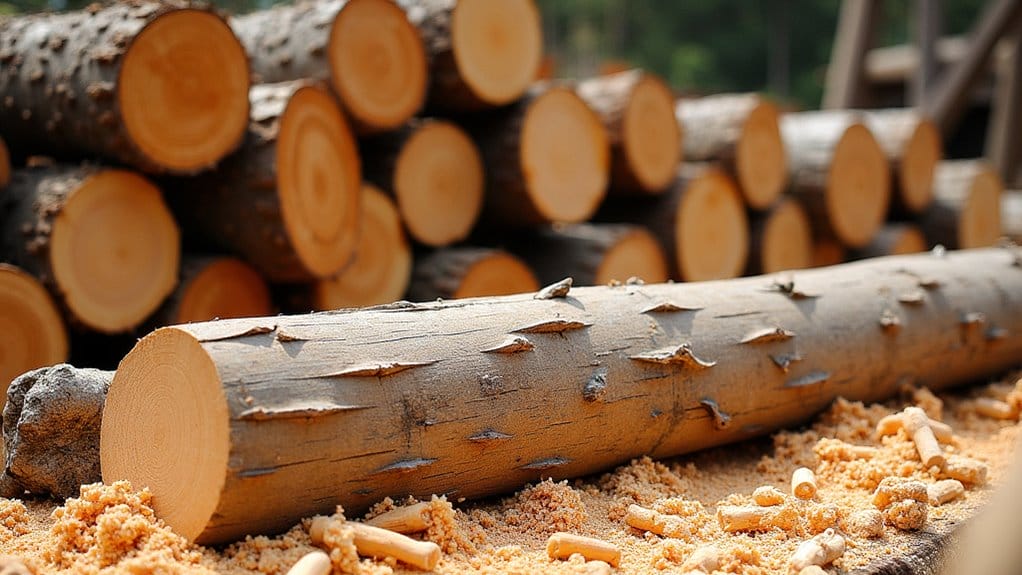
We’ll examine how manufacturers select hardwoods like maple, beech, and oak that offer durability and food-safe properties for wooden spoon production.
Our sustainable sourcing practices focus on responsibly harvested timber from certified forests to guarantee environmental stewardship and long-term resource availability.
Before shaping begins, we must properly treat and dry the raw wood to achieve an ideal moisture content of 6-8%, preventing future warping or cracking in the finished spoons.
Choosing the Right Type of Wood
Before manufacturing wooden spoons, selecting the right type of wood is essential for ensuring both functionality and longevity. We’ll focus on hardwood species that offer durability and resistance to wear. Beech and birch wood are popular choices due to their tight wood grain and food-safe properties.
| Wood Type | Properties | Best Use |
|---|---|---|
| Beech | Dense, hard | Daily use |
| Birch | Light, smooth | Delicate foods |
| Maple | Very hard | Heavy mixing |
When evaluating wood species, we consider factors like density, grain pattern, and moisture resistance. These characteristics directly impact the spoon’s performance and lifespan in the kitchen.
Sustainable Sourcing Practices
Since sustainable practices form the foundation of responsible manufacturing, our sourcing process begins by carefully selecting timber from certified forests that adhere to strict replanting protocols.
We prioritize eco-friendly hardwoods like birch, which offers an ideal balance of durability and the potential for sustainable sourcing. Our partnerships with forest managers confirm we’re using biodegradable materials from responsibly managed woodland areas.
We carefully track each timber batch from harvest to production, maintaining detailed records of origin, age, and certification status. This transparency ensures our wooden spoons come from verifiable, sustainable sources.
Initial Wood Treatment and Drying
The careful selection and treatment of raw timber marks the critical first phase in wooden spoon production.
We begin by choosing the right wood, typically hardwoods like maple, beech, or cherry, known for their durability and tight wood fibers. These types of wood must undergo precise moisture control before manufacturing can begin.
We carefully measure the moisture content of each timber piece, ensuring it falls between 6-8% through kiln drying. This controlled drying process prevents future warping and cracking while strengthening the wood’s natural properties.
Once the wood reaches ideal moisture levels, we can proceed with cutting and shaping.
Precision Cutting and Shaping

We’ll begin by cutting standardized wood blanks to the rough dimensions needed for our spoon production using precision band saws and automated cutting equipment.
For consistent results across large production runs, we employ CNC machines programmed with exact specifications to carve the basic spoon shapes, including the bowl and handle profiles.
After mechanical shaping, skilled artisans hand-carve intricate details and perform fine adjustments that give each spoon its finished character while maintaining quality control standards.
Cutting Wood Blanks
Precision cutting begins the transformation of raw lumber into uniform blanks that will become wooden spoons. We first mark the dimensions on each piece of wood according to standardized spoon patterns.
Using industrial band saws, we cut the wood into rectangular spoon blanks, carefully following the grain direction to guarantee ideal strength. We then remove excess wood chips by rough-cutting the basic shape, leaving adequate material for detailed shaping later.
Our automated cutting systems maintain consistent blank sizes while minimizing waste, preparing each piece for the next manufacturing phase.
Using CNC Machines for Consistency
Modern CNC machines transform our wooden spoon blanks into precisely shaped utensils through computer-controlled cutting paths.
We program the production process to follow a step-by-step sequence that guarantees a consistent spoon shape across batches. First, the machine rough-cuts the basic profile, then moves to detailed carving of the bowl and handle.
Quality control sensors monitor each cut and adjust for variations in wood grain. CNC technology allows us to maintain exact size and shape specifications within a 0.1mm tolerance.
Multiple spoons can be carved simultaneously, greatly increasing manufacturing efficiency while preserving exceptional quality standards.
Hand Carving Details
Skilled artisans enhance each CNC-carved spoon with detailed hand-finishing techniques.
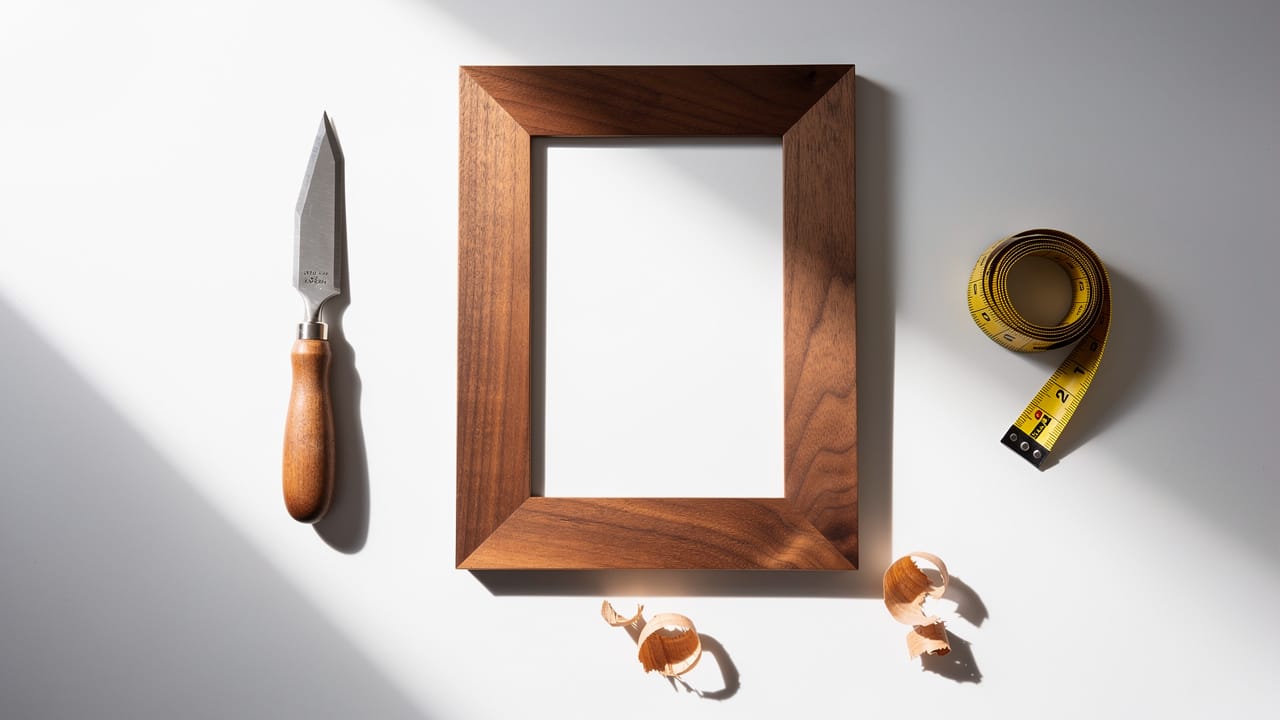
Using specialized carving tools, craftspeople carefully refine the curvature and depth of the spoon bowl. We employ various hand tools, including a carving knife with different blade profiles, to make smooth adjustments between surfaces and perfect the ergonomic handle design.
Our wood carving expertise allows us to add decorative elements and ensure proper grain alignment for maximum strength.
Each artisan inspects the spoon’s balance, adjusting subtle contours while maintaining uniform thickness.
This meticulous hand-finishing process transforms machine-cut blanks into refined, functional utensils that meet our quality standards.
Sanding and Surface Finishing
Let’s examine how wooden spoons undergo a multi-stage sanding process that begins with coarse-grit paper and progresses to ultra-fine grits for ideal smoothness.
We’ll guarantee each spoon receives multiple applications of food-safe oils or waxes that penetrate the wood fibers, creating a protective barrier while enhancing the natural grain patterns.
Our rigorous quality control measures include tactile inspections and magnified surface checks to verify that every spoon meets strict smoothness standards before it is moved to final packaging.
Multi-Stage Sanding Process
Once the initial shaping of the wooden spoon is complete, we begin the critical multi-stage sanding process to achieve a smooth, food-safe finish.
We start with coarse-grit sandpaper to remove any rough spots and excess material from the carving process. Next, we progressively work through medium and fine grits, carefully sanding with the wood grain to eliminate rough edges.
Each stage requires careful attention to guarantee we don’t oversand or create uneven areas. The final passes with ultra-fine sandpaper create the silky smooth surface that’s essential for a quality wooden spoon.
Applying Food-Safe Finishes
After achieving the perfect sanded surface, we begin treating the spoons with food-safe finishes that protect and enhance the wood.
We carefully apply multiple coats to guarantee proper absorption and durability. Our process involves selecting the right food-safe finish for the best results.
- We use pure mineral oil as our primary finish, which deeply penetrates the wood fibers.
- Food-safe linseed oil provides an excellent alternative for a harder protective coating.
- Each coat must fully dry before the next layer is applied.
- We hand-rub the food-safe oil into the grain using circular motions.
- Multiple thin coats protect the wood better than one thick application.
Quality Control in Surface Smoothness
Quality control during surface finishing requires rigorous inspection protocols to guarantee each wooden spoon meets our exacting standards.
We carefully examine each spoon under bright lighting, feeling for any rough spots or potential splinters that could compromise safety. Our inspectors run their hands along every surface, checking for inconsistencies in the sanding process.
To make wooden utensils that are safe for food preparation, we verify 100% smoothness at critical points – the bowl, handle, and junction areas.
Any spoon that doesn’t meet our surface texture requirements undergoes additional sanding or is removed from production.
Popular Customization Options
Let’s examine the key customization options available when manufacturing wooden spoons.
We’ll find that personalized engraving services allow for names, dates, or designs to be added, while custom shapes and sizes can accommodate specific cooking or serving needs.
Manufacturers also offer various wood types, from maple to cherry, paired with finish options such as mineral oil or beeswax, and can provide custom packaging solutions for retail or gifting.
Personalized Engraving

Personalized engraving adds a distinctive touch to wooden spoons through several popular customization methods.
We’ll explore how the production of disposable wooden utensils can be transformed into aesthetically pleasing keepsakes through personalization.
- Laser engraving – precise, computer-controlled designs burned into the wood
- Hand-carved text – traditional method using specialized chisels
- Heat stamping – metal dies pressed against the wood surface
- CNC routing – automated carving for complex patterns
- Wood burning – freehand artistic designs using pyrography tools
When we make a wooden spoon special through personalized engraving, we’re creating unique items that combine functionality with personal meaning.
Custom Shapes and Sizes
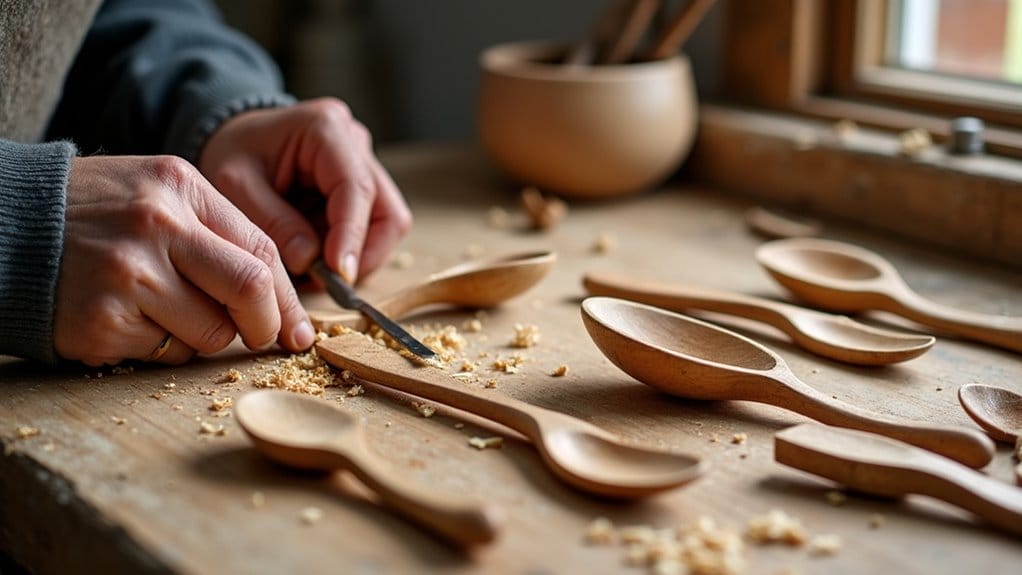
Many wooden spoon manufacturers offer custom shapes and sizes to meet specific culinary needs and design preferences.
When wooden spoons are made with customization in mind, we’ll work with clients to determine the ideal shape of the spoon, including bowl depth, handle length, and overall dimensions.
During the spoon-making process, we use specialized templates and tools to achieve the desired specifications.
The shaping process involves careful carving and sanding to create unique features like deeper bowls for serving soups or longer handles for cooking in deep pots.
These custom shapes and sizes guarantee each spoon perfectly matches its intended use.
Choice of Wood Types and Finishes

When selecting wood types for spoon manufacturing, we prioritize hardwoods that offer durability, food safety, and aesthetic appeal.
The process of wooden spoon production requires careful attention to material selection to create high-quality wooden utensils that are both functional and aesthetically pleasing.
- Maple provides excellent durability and naturally resists bacteria.
- Cherry offers rich coloring and smooth grain patterns.
- Beech delivers reliable performance at a more accessible price point.
- Walnut creates striking dark tones and superior wear resistance.
- Olive wood features unique grain patterns and natural antimicrobial properties.
We choose wood varieties that are food-safe, withstand regular use, and maintain their beauty over time.
Packaging Customization

The packaging options we offer complement the natural beauty of our wooden spoons through customizable design elements.
We provide laser-engraved branding on both our wooden utensils and packaging, allowing customers to add logos or personalized messages.
For disposable wooden cutlery sets, we offer eco-friendly kraft paper sleeves with custom printing.
Our premium gift boxes feature magnetic closures and foam inserts to protect each piece.
When packaging disposable cutlery, we guarantee items are ready for use with individually wrapped options.
We’ll make a wooden utensil set stand out with ribbon accents, protective shrink wrap, or branded sticker seals.
Assembly and Packaging
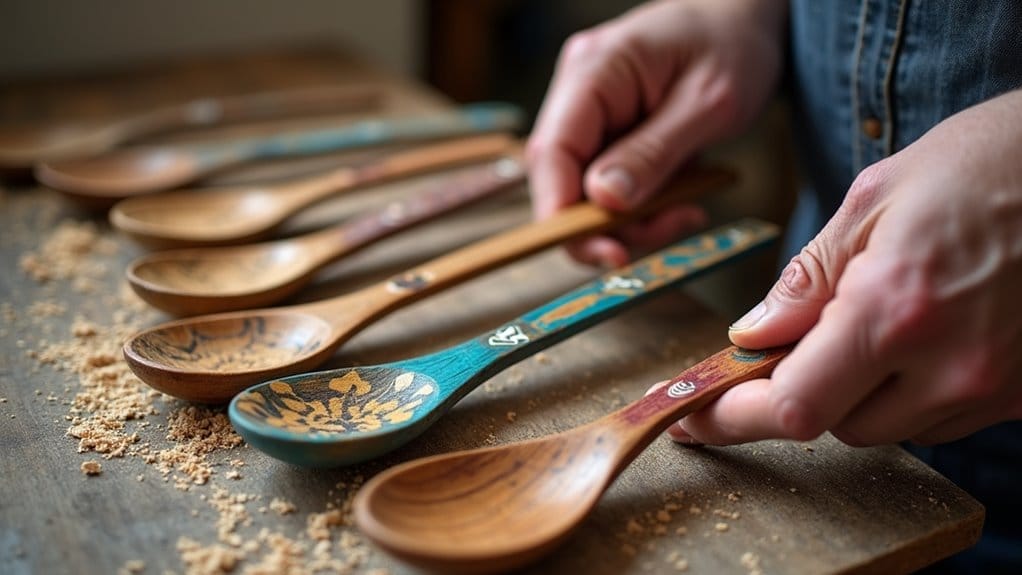
We’ll add any functional or decorative elements, such as branded stamps, wood-burned designs, or protective finishes, before moving the spoons to final assembly.
Our packaging methods prioritize eco-friendly materials, such as recycled cardboard boxes, biodegradable wrapping paper, and natural twine, to secure bundles of spoons.
We carefully place instructional inserts with care guidelines and brand stories into each package while ensuring minimal waste in our packaging process.
Adding Functional or Decorative Elements
During final production stages, wooden spoons undergo several decorative and functional enhancements to improve their appearance and usability.
In spoon making, we carefully enhance each piece with these key additions:
- We apply a food-safe mineral oil coating to protect the wood
- We carve decorative patterns into the handle using specialized cutting tools
- We add grip texturing to prevent slipping during use
- We engrave maker’s marks or logos into the bowl of the spoon
- We burnish the surface to achieve a smooth, polished finish
These enhancements ensure both beauty and functionality while preserving the wood’s natural character.
Eco-Friendly Packaging Solutions
Since sustainability remains a core value in wooden spoon manufacturing, our packaging process prioritizes eco-friendly materials and minimal waste.
We bundle disposable wooden utensils made from sustainably sourced timber in recycled kraft paper sleeves. Each piece, like a spoon or other cutlery items, is carefully wrapped in biodegradable cellulose film to prevent damage during shipping.
We use corrugated cardboard boxes made from post-consumer materials for bulk packaging. Our eco-friendly packaging includes QR codes that link to proper disposal instructions, ensuring our products’ end-of-life cycle aligns with environmental standards.
Final Words
We’ve traced the journey of wooden spoon manufacturing from selecting raw lumber to precision cutting and meticulous finishing. Through our systematic exploration of each production phase, we’ve seen how modern technology and traditional craftsmanship combine to create these essential kitchen tools. Whether machine-made or hand-carved, today’s wooden spoons reflect both manufacturing efficiency and careful attention to quality, durability, and user comfort.
FAQs
How Long Does a Wooden Spoon Typically Last With Proper Care?
We’ll get 5-10 years of use from a quality wooden spoon when we hand-wash it, dry it thoroughly, oil it occasionally, and keep it away from prolonged water exposure and extreme temperatures.
Can Wooden Spoons Be Safely Cleaned in a Dishwasher?
We don’t recommend putting wooden spoons in dishwashers. The high heat and harsh detergents cause warping, cracking, and breakdown of wood fibers. Instead, we’ll hand-wash them with mild soap and water.
Why Do Some Wooden Spoons Develop Cracks Over Time?
We’ll find cracks develop in wooden spoons when moisture repeatedly penetrates the wood fibers, causing expansion and contraction cycles. This stress, combined with heat exposure, breaks down the wood’s internal structure.
Are All Types of Wooden Spoons Safe for Cooking?
We’ll find most hardwood spoons are safe for cooking, but we shouldn’t use softwood types due to resin content. We must avoid spoons treated with unknown finishes or toxic coatings.
What Causes Wooden Spoons to Retain Food Odors?
We’ll find that food odors persist in wooden spoons because their porous surfaces absorb oils and moisture, while microscopic cracks trap food particles, allowing bacteria to colonize and create lasting smells.