When you’re crafting wooden bangles, your choice of wood material will make or break your final product. You’ll need to weigh multiple factors: durability for daily wear, grain patterns that catch the eye, and workability for your tools. From exotic hardwoods like African blackwood to sustainable options like bamboo, each species offers distinct properties that influence your design possibilities. Let’s examine the best wood choices for creating unique, lasting pieces.
Key Takeaways
- Dense hardwoods like rosewood, teak, and ebony are ideal for bangles due to their durability and resistance to daily wear.
- Sustainable options include bamboo, which offers lightweight properties and easy workability for creating intricate designs.
- High-density woods with good moisture resistance protect bangles from skin oils and environmental conditions during regular use.
- Woods that accept stains evenly and achieve high polish, like maple and ebony, create visually striking finished pieces.
- Exotic woods with unique grain patterns and natural colors command higher prices and offer distinctive aesthetic appeal.
Importance of Selecting the Right Wood for Bangle Making

Three critical factors make wood selection essential for successful bangle making: durability, workability, and aesthetic appeal.
When you’re crafting wooden bangles, you’ll need hardwood species that can withstand daily wear while maintaining their strength and shape. One option for sourcing these materials is to explore wholesale wooden bangles suppliers online, where you can find a variety of options at competitive prices. Additionally, many suppliers offer customization services that allow you to create unique designs tailored to your brand’s aesthetic. Ensure that the suppliers you choose prioritize sustainability in their sourcing practices to support environmentally friendly craftsmanship.
Your chosen wood must also have workable properties that allow for precise cutting, shaping, and finishing without splitting or splintering.
The wood’s grain pattern plays a crucial role in jewelry-making aesthetics – it’ll determine your bangle’s final appearance.
Dense hardwoods with striking wood patterns often create the most appealing and long-lasting pieces for your collection.
Common Types of Wood Used for Bangles Making

When you’re crafting bangles, you’ll find that rosewood and teak wood stand as premier choices, with rosewood offering rich color depth and teak providing exceptional durability against wear.
You can achieve striking results with ebony’s distinctive black grain patterns and high density, while bamboo presents a sustainable alternative that’s remarkably lightweight and easy to work with.
These traditional wood options, along with materials like sandalwood and maple, each bring their own unique working properties and aesthetic characteristics to your bangle-making process.
Rosewood: Deep Color and Natural Luster
Among the most coveted woods for bangle making, rosewood stands out for its rich burgundy to deep brown hues and exceptional natural luster.
When you’re working with this premium hardwood, you’ll notice its remarkable density and tight grain pattern, making it perfect for creating durable, high-end bangles.
- Oil-rich composition enhances the wood’s natural sheen without requiring excessive finishing
- Exceptional stability prevents warping and cracking over time
- Color deepens naturally with age and UV exposure, developing a sought-after patina
Select quarter-sawn rosewood pieces to maximize figure and dimensional stability in your bangle projects.
Teak Wood: Durability and Aesthetic Appeal
Like rosewood, teak wood has earned its reputation as a premier choice for bangle making, offering a unique combination of natural oils and silica content that makes it exceptionally resistant to decay and moisture.
When you’re crafting bangles, you’ll find teak’s strong and durable nature allows for intricate carving while maintaining structural integrity.
The wood grain displays a distinctive pattern that creates visual interest, with a natural texture that’s both elegant and rustic.
You’ll appreciate how teak takes on a rich, golden-brown finish that deepens over time, and its tight grain structure guarantees your bangles will remain stable through various weather conditions.
Ebony: Unique Properties and Visual Impact
Because of its exceptional density and striking black color, ebony stands as one of the most prestigious woods for bangle making.
This highly prized exotic wood offers unique characteristics you’ll appreciate when crafting fine jewelry. exploring different designs for your pieces can be enhanced by finding wood bangle stand suppliers near me who can provide the best materials. Not only will this support the local economy, but it will also ensure that you have access to quality wood that complements your artistic vision. Additionally, collaborating with suppliers can lead to unique insights and inspiration for your next project.
- Dense grain structure creates a mirror-like polish that’s unmatched by other woods
- Natural variations from dark brown to jet black add depth and character to your designs
- Exceptional durability means your bangles will maintain their luxurious appearance for generations
You’ll find ebony challenging to work with due to its density, but the remarkable results justify the extra effort.
Its natural resistance to moisture makes it ideal for everyday wear.
Bamboo Wood: Lightweight and Eco-Friendly Option
While traditional hardwoods dominate bangle making, bamboo has emerged as an innovative choice that combines sustainability with practical benefits.
This type of wood’s hollow structure creates naturally lightweight bracelets that won’t weigh down your wrist. You’ll find bamboo’s grain pattern offers subtle beauty, and its smooth texture requires minimal finishing.
When crafting wooden bangles from bamboo, you’ll notice it’s easier to shape than dense hardwoods, though you’ll need sharp tools to prevent splitting.
The unfinished surface takes well to oils and natural sealants, while its rapid growth cycle makes it an environmentally responsible material choice.
Other Popular Wooden Materials for Bangles
Beyond bamboo’s sustainable appeal, several traditional hardwoods have earned their place as premier materials for bangle crafting.
When selecting wood for your jewelry pieces, consider these premium options:
- Cherry wood offers a reddish-brown hue that deepens with age, making it ideal for bangles that develop character over time.
- Walnut provides excellent stability and a rich, dark grain pattern that’s perfect for statement pieces.
- Ebony wood is one of the most prestigious choices, featuring exceptional density and a striking black color that polishes to a mirror-like finish.
These hardwoods deliver superior durability while allowing you to create distinctive, lasting bangles.
Key Properties to Consider When Choosing Wood for Bangles
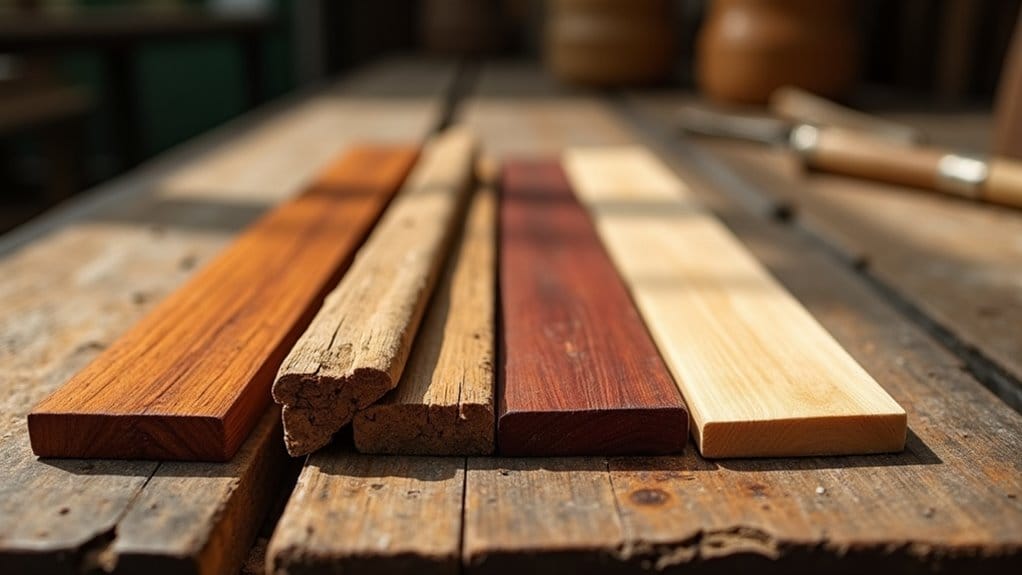
When selecting wood for bangle making, you’ll need to evaluate several essential material properties that directly impact your final product’s quality and longevity.
You should assess the wood’s hardness rating for durability, examine its grain pattern and natural coloring for aesthetic appeal, and test its workability to guarantee it won’t split or crack during turning.
The wood’s resistance to moisture absorption and wear is equally important, as these factors determine how well your bangles will maintain their shape and finish through regular use.
Hardness and Durability
Since wooden bangles must withstand daily wear and regular impacts, selecting wood with appropriate hardness and durability is critical for long-term performance. The type and quality of wood directly affect your bangle’s longevity and resistance to damage.
- Choose harder woods like teak, rosewood, or oak for superior wear protection and minimal denting.
- Avoid softer woods like pine or cedar, which scratch easily and won’t maintain their shape.
- Test your wood’s hardness using the Janka scale – aim for ratings above 1,000 for maximum durability.
Consider applying protective finishes to enhance your chosen wood’s natural resistance to daily wear.
Grain Pattern and Color Variations
The aesthetic appeal of wooden bangles stems from both their structural integrity and visual characteristics.
When selecting wood, you’ll want to examine the grain pattern‘s consistency and flow. Straight-grained woods offer clean lines, while figured patterns create dramatic visual interest.
Consider how different species display unique tone variations – from rich walnut to subtle maple. Look for woods that showcase warm, natural coloring or distinctive reddish hues.
The grain’s orientation affects both appearance and durability. Quarter-sawn pieces reveal striking ray patterns, while flat-sawn sections display broader grain features.
Choose woods whose natural patterns complement your design vision.
Workability and Finishing Qualities
Making successful wooden bangles requires careful consideration of each wood species’ workability characteristics and finishing properties. When selecting the right materials, it is equally important to have access to tools for making wooden bangles that are suitable for your specific project. A well-equipped workspace can greatly enhance the quality of your craftsmanship. Additionally, investing in high-quality tools can lead to more precise cuts and a smoother finished product.
When you choose wood for bangles, evaluate these key aspects:
- Select species with good workability that can be shaped without splitting, splintering, or tearout during turning and carving.
- Look for woods that accept stain evenly and predictably while allowing the natural grain to remain visible.
- Consider how well the wood takes a high gloss finish – some species naturally polish to a brilliant sheen while others need multiple finish coats.
Test samples of different species to determine which best matches your intended design aesthetic and production methods.
Resistance to Moisture and Wear
Because wooden bangles endure constant contact with skin oils and environmental moisture, you’ll need to select species with excellent natural resistance to both wear and humidity changes.
Hard maple offers superior wear resistance and dimensional stability, making it ideal for daily-wear bangles.
Oak’s strong interlocking grain structure provides exceptional durability, while its natural tannins help resist moisture absorption.
Ash combines excellent shock resistance with good moisture-handling properties, though it’s slightly less wear-resistant than maple.
When evaluating wood species, prioritize those with high density and tight grain – these properties typically indicate better moisture resistance and durability.
How to Choose the Best Wood for Unique Wooden Bangles

When crafting unique wooden bangles, you’ll need to align specific wood properties like grain pattern, hardness, and workability with your design specifications while considering current market trends and customer preferences.
You’ll find that sustainable wood choices, such as certified hardwoods from managed forests, not only meet environmental standards but also appeal to eco-conscious consumers.
To guarantee superior results, you must carefully evaluate each wood species’ characteristics against your production methods and intended design aesthetic, taking into account factors like seasonal availability and long-term sourcing reliability.
Matching Wood Properties to Design Requirements
To create stunning wooden bangles that stand the test of time, you’ll need to carefully match your wood selection to your design requirements.
Consider how each species’ natural properties will affect your final piece.
- Light-colored woods like maple naturally brighten intricate bead details and showcase fine grain patterns.
- Dense, oily species such as teak and rosewood offer superior moisture resistance and durability for daily wear.
- Ring-porous woods like oak and ash provide distinctive appearance but require additional stabilization to prevent splitting.
Choose woods that complement both your aesthetic vision and structural needs while considering their workability characteristics.
Considering Customer Preferences and Market Trends
Beyond technical wood properties, market research reveals clear patterns in customer wood preferences for bangles.
You’ll find that exotic woods with rich golden or purple hues consistently command premium prices, especially when matched with complementary earring sets.
Your selection should align with current fashion trends – lighter woods are popular for summer collections, while deeper tones sell better in winter.
Consider that sustainable wood choices increasingly influence buying decisions, with customers willing to pay more for certified materials.
Track social media engagement to identify which wood varieties generate the most interest among your target market.
Sustainability and Sourcing Considerations
Since sustainable wood sourcing has become essential in bangle making, you’ll need to establish reliable partnerships with certified suppliers who follow responsible forestry practices.
When selecting wood, consider these critical sustainability factors:
- Choose local tree species that support your region’s ecosystem and minimize transportation impact.
- Opt for stronger, sustainable woods from managed forests that would be best for your production range.
- Use interior wood portions efficiently, maximizing yield while maintaining quality.
Look for suppliers with FSC certification and documented chain-of-custody tracking.
Request samples to verify wood quality and sustainability claims before committing to bulk purchases.
Frequently Asked Questions
How Long Does It Take to Make a Wooden Bangle?
You’ll spend 2-4 hours crafting a wooden bangle from start to finish, including turning, sanding, and finishing. Complex inlays or intricate designs can extend this to 6-8 hours.
Can Wooden Bangles Be Resized After They’re Made?
You can’t resize solid wooden bangles after they’re complete. Unlike metal jewelry, wood’s structure doesn’t allow for expansion or reduction without compromising the bangle’s integrity and risking breakage.
How Should I Store My Wooden Bangles to Prevent Warping?
Store your wooden bangles in a climate-controlled environment at 40-50% humidity. Keep them flat, away from direct sunlight, and don’t stack them. Use silica gel packets to prevent moisture damage.
Are Wooden Bangles Safe for People With Metal Allergies?
You’ll find wooden bangles are an excellent choice if you’re allergic to metals. Natural wood contains no metal allergens, though you should verify any finishes or sealants used are hypoallergenic.
What Tools Are Needed to Make Wooden Bangles at Home?
You’ll need a lathe, chisels, calipers, sandpaper (80-400 grit), measuring tools, protective gear, wood sealer, finish, and sharp carving tools for precise shaping and detailed work.
Conclusion
When you’re crafting wooden bangles, your wood selection will make or break your design. You’ll want to focus on dense hardwoods that can withstand daily wear while showcasing distinct grain patterns. Remember to regard your wood’s workability, moisture resistance, and natural luster. Whether you choose classic rosewood for its rich tones or sustainable bamboo for its flexibility, select materials that align with both durability requirements and your artistic vision.